
Why Every Student Needs to Know About Student Travel Insurance Namibia
Student travel insurance Namibia is a specialized policy that protects you financially while studying or traveling in Namibia — covering medical emergencies, trip cancellations, lost baggage, and emergency evacuation.
Quick answer — what you need to know:
| What | Details |
|---|---|
| Is it mandatory? | Not required by Namibian law, but often required by universities and visa authorities |
| What does it cover? | Medical emergencies, evacuation, trip cancellation, lost luggage, COVID-19 |
| How much does it cost? | From as little as $1.50/day up to ~$29/month depending on coverage level |
| Who needs it? | International students coming to Namibia and Namibian students going abroad |
| Where to buy? | Online — compare plans before your departure date |
Namibia is an incredible destination. Desert dunes, wildlife safaris, and dramatic canyons make it one of Africa’s most exciting places to study or explore. But exciting also means unpredictable.
Medical care in Namibia can be expensive, especially outside Windhoek. A single emergency evacuation can cost tens of thousands of dollars. Without the right cover, that bill comes straight out of your pocket — or your scholarship.
In April 2026, more students than ever are crossing borders for education. Over 4.5 million students are currently studying outside their home countries. The smartest ones travel protected.
This guide walks you through everything — from visa requirements to adventure activity coverage — so you can find the best, most affordable plan for your situation.
Why Student Travel Insurance Namibia is Essential in 2026
As we navigate through April 2026, the landscape of international education has become more dynamic than ever. Namibia has emerged as a premier hub for environmental studies, geology, and cultural exchange. However, the very things that make Namibia beautiful—its vast, remote deserts and wild landscapes—also present unique risks for students.
When we talk about why student travel insurance Namibia is essential, we aren’t just talking about a “nice-to-have” document. We are talking about your financial and physical lifeline.
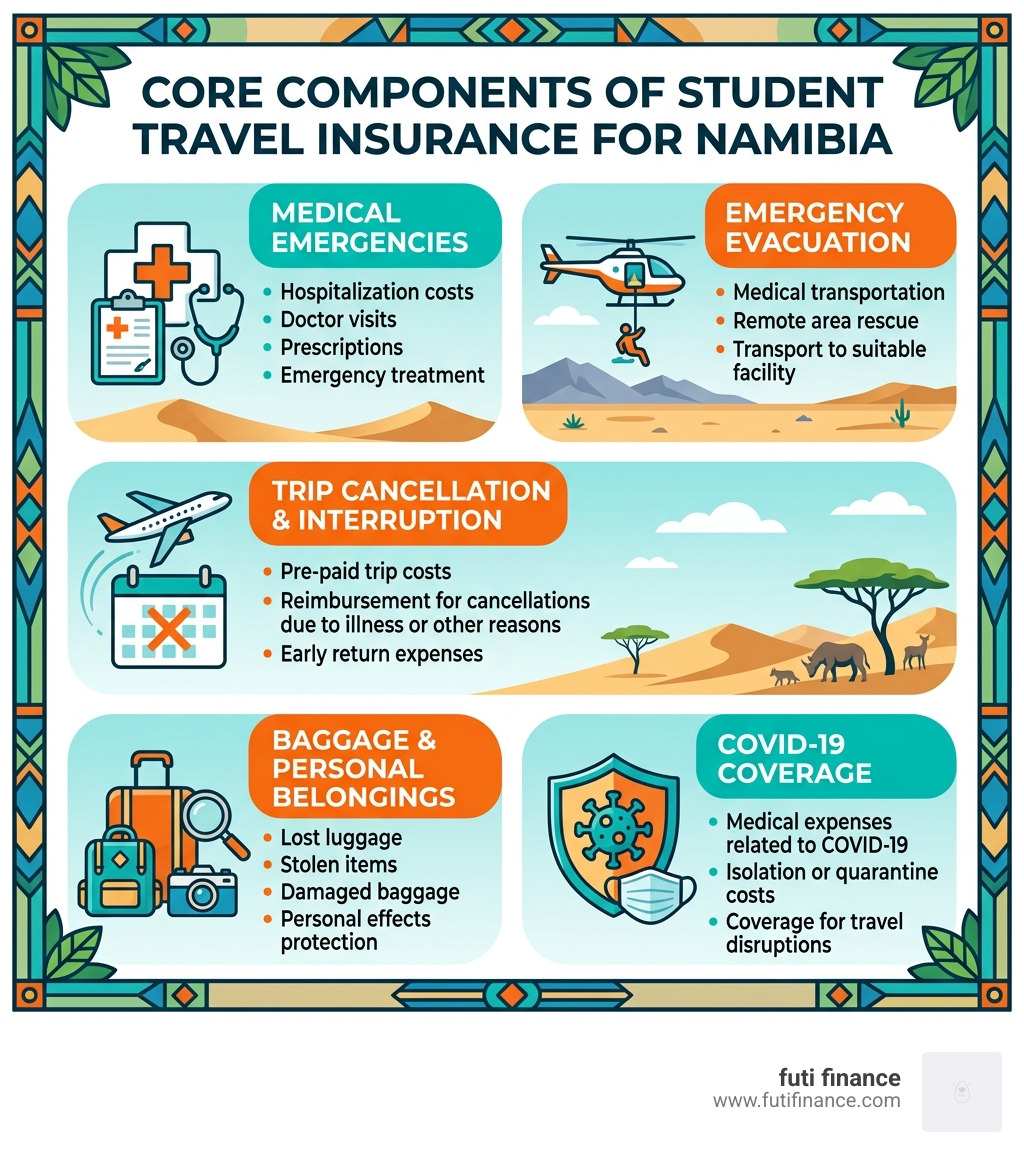
- Medical Emergencies: While Windhoek offers quality private healthcare, if you fall ill with a tropical fever or suffer an injury while researching in the Kunene region, the costs can skyrocket. Private hospitals often require proof of insurance or a significant cash deposit before admission.
- Emergency Evacuation: Namibia is a massive country. If you are hiking the Fish River Canyon and need an emergency airlift, you could be looking at a bill of $20,000 or more. Comprehensive plans include air ambulance services to the nearest adequate facility.
- Trip Cancellation and Interruption: Life happens. Whether it’s a family emergency back home or a sudden illness that prevents you from starting your semester, trip cancellation coverage ensures you don’t lose thousands in non-refundable tuition and airfare.
- Lost or Stolen Baggage: Students carry expensive gear—laptops, cameras, and textbooks. If your bags vanish between connections at Hosea Kutako International Airport, insurance helps you replace those essentials without draining your savings.
- Academic Interruption: Some specialized student plans even cover the loss of tuition fees if you are forced to discontinue your studies due to a covered medical reason.
How student travel insurance Namibia Differs from Tourist Plans
Many students make the mistake of buying a standard “backpacker” or “tourist” policy. While these are great for a two-week holiday, they often fall short for a semester-long stay.
- Duration of Coverage: Standard tourist plans often cap out at 30 or 90 days. Student travel insurance Namibia plans are designed for the long haul, often covering you for up to 12 months or even four years.
- Mental Health Support: Studying abroad can be stressful. Modern student-focused plans often include coverage for mental health consultations, which is rarely found in basic tourist insurance.
- University Waiver Compliance: Most universities have specific “waiver” requirements. They won’t just accept any insurance; it needs to meet certain “Schengen-level” or “J-1” standards for medical limits and repatriation.
- Study-Abroad Focus: These plans often cover you while you are on campus, in your student housing, and while traveling during academic breaks.
Visa and University Requirements for International Students
If you are planning to enter Namibia on a student visa, you need to be aware of the regulatory environment. While the Namibian government may not always check for a physical insurance card at the border, your university almost certainly will.
Most Namibian higher education institutions require international students to prove they have adequate medical cover before they can register for classes. This is to ensure that the university isn’t held liable for your medical costs and that you can access the best care available without financial strain.
For those looking for tailored, smart insurance solutions, Futi Finance Student Protection Plans offer a modern approach to staying compliant while keeping costs low.
Specific Plans for Namibian Students Studying Abroad
We also need to consider the thousands of Namibian “Global Citizens” heading outbound. If you are a Namibian student heading to the USA, Europe, or the UK, your insurance needs change drastically:
- USA (F-1 and J-1 Visas): The US Department of State has strict mandates for J-1 visa holders, including at least $100,000 in medical benefits per accident or illness and $25,000 for repatriation of remains.
- Schengen Area (Europe): If you are heading to Germany, France, or Spain, you must have insurance with a minimum coverage of €30,000 that includes emergency hospital treatment and repatriation.
- Global Protection: Unlike local medical aids that might only work within the SADC region, international student insurance provides 24/7 global support, ensuring you are covered during layovers and weekend trips to neighboring countries.
Key Coverage Features of student travel insurance Namibia Plans

What exactly should you look for in a policy? In 2026, the standard for “good coverage” has shifted. It’s no longer just about broken bones; it’s about comprehensive protection.
- COVID-19 Medical: Most reputable plans now treat COVID-19 like any other illness, covering hospitalization and treatment if you test positive while abroad.
- Emergency Dental: If you develop an acute infection or chip a tooth, you’ll want a plan that covers at least $250–$500 for emergency pain relief.
- 24/7 Assistance: This is a “must-have.” You need a hotline where you can speak to a medical professional or a coordinator who can arrange a guarantee of payment to a Namibian hospital.
- Personal Liability: If you accidentally cause damage to your student accommodation or (heaven forbid) injure someone while cycling, personal liability coverage protects you from legal costs.
Covered Adventure Activities
Namibia is an adventurer’s playground. We believe your insurance shouldn’t stop you from having fun, but you must ensure your policy includes “Adventure Sports” riders. Standard student travel insurance Namibia usually covers:
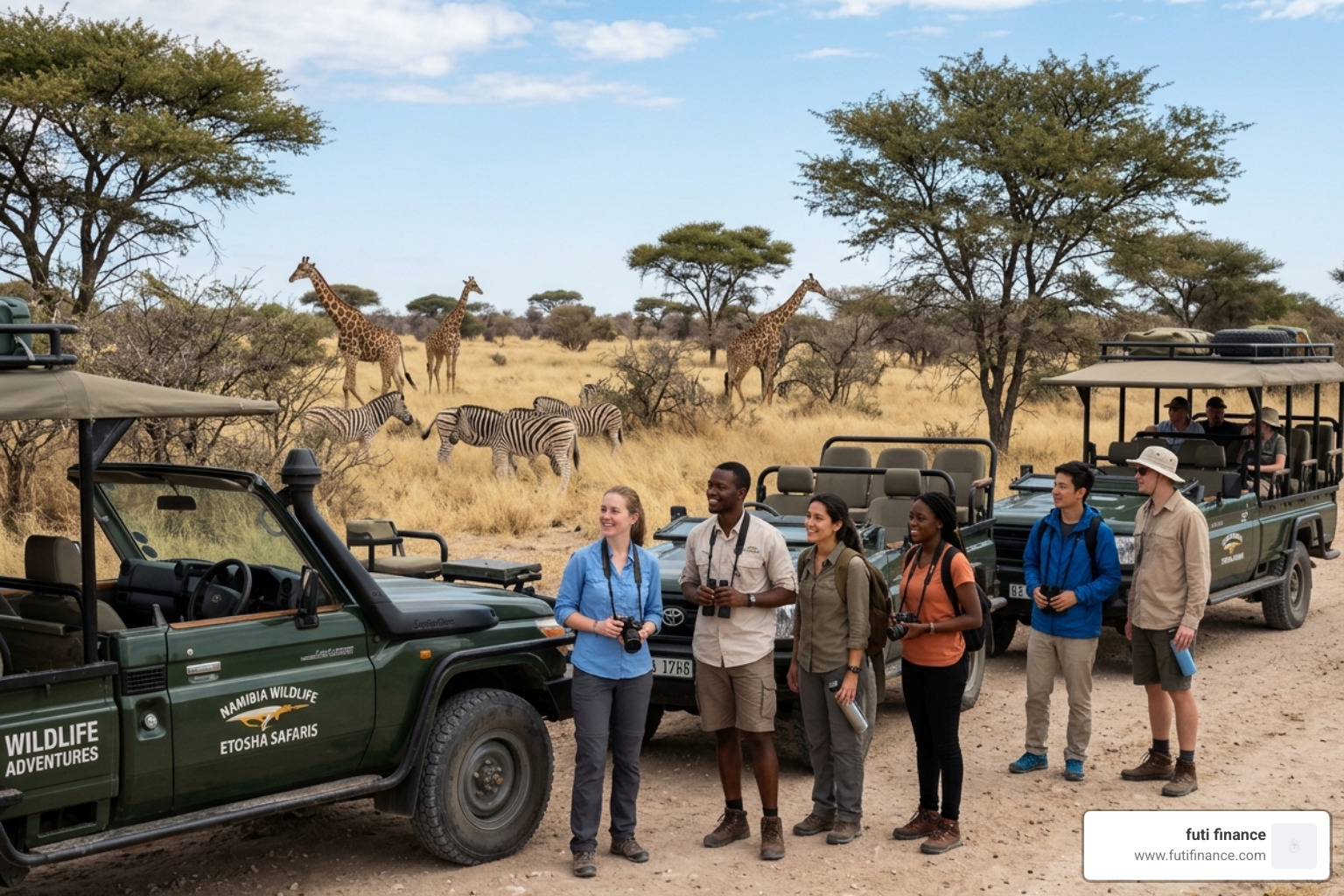
- Etosha Safaris: Coverage for incidents involving wildlife or vehicle breakdowns in remote areas.
- Fish River Canyon Hiking: Medical evacuation is critical here due to the heat and isolation.
- Sandboarding & Quad Biking: Swakopmund is the adventure capital; make sure your plan doesn’t exclude “organized sports” or “extreme activities.”
- Volunteering: If you are working with wildlife or in rural schools, ensure your policy covers “non-manual labor.”
The “No-Go” Zone (Exclusions): Even the best plans have limits. You generally won’t be covered for:
- Reckless Behavior: Injuries sustained while under the influence of alcohol or drugs.
- Pre-existing Conditions: Unless you have a specific “Acute Onset” rider, chronic conditions you had before traveling are often excluded.
- Unlicensed Driving: If you rent a car to drive to Sossusvlei without a valid international driver’s license, your insurance is void.
Managing Costs and Comparing Policies Online
Budgeting is a huge part of student life. We know you’d rather spend your money on a trip to the Skeleton Coast than on insurance premiums. However, the “cheapest” plan isn’t always the best value.
| Feature | Fixed Benefits Plan | Comprehensive Plan |
|---|---|---|
| Cost | Very Low (e.g., $1.50/day) | Moderate (e.g., $29/month) |
| Medical Limit | Capped per incident (e.g., $500) | High total limit (e.g., $500,000+) |
| Deductible | Usually $0 – $100 | Flexible ($0 – $5,000) |
| Best For | Short trips, very tight budgets | Long-term study, visa compliance |
Comparing student travel insurance Namibia Costs
Several factors will influence how much you pay for your student travel insurance Namibia:
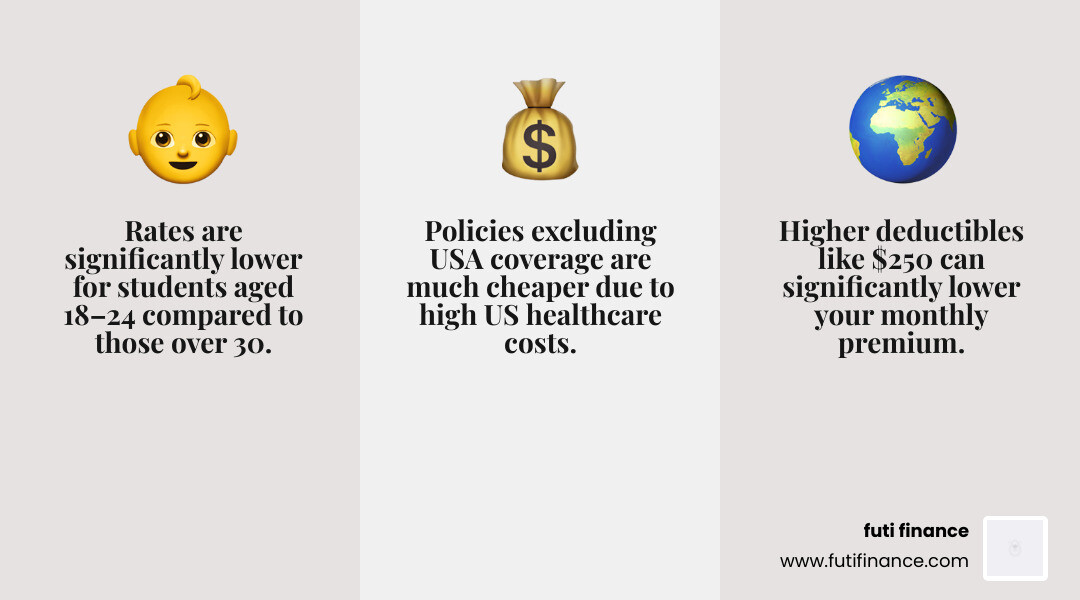
- Your Age: Rates are significantly lower for students aged 18–24. Once you hit 30, premiums start to creep up.
- Deductible Level: This is the amount you pay out of pocket before insurance kicks in. Choosing a $250 deductible can lower your monthly premium significantly.
- Coverage Area: A policy that covers “Worldwide Excluding USA” is much cheaper than one that includes the United States, due to the high cost of American healthcare.
- Trip Duration: Buying a six-month block is often cheaper than renewing month-to-month.
Emergency Procedures: Filing a Claim in Namibia
Imagine you’re in a clinic in Walvis Bay. What do you do? The process for filing a claim should be simple, but it requires you to be organized.
- Step 1: Contact the Hotline Immediately. Before agreeing to major procedures (unless it’s a life-threatening emergency), call your insurance provider. They can often arrange “Direct Billing” so you don’t have to pay upfront.
- Step 2: Gather Medical Reports. Ensure the doctor writes down a clear diagnosis. In Namibia, ensure the report is in English (which is the official language, so this is usually easy).
- Step 3: Keep Every Receipt. From the specialist’s bill to the taxi ride to the pharmacy—keep it all. Digital copies are your best friend; snap a photo of every receipt immediately.
- Step 4: Police Statements. If you are a victim of theft, you must report it to the Namibian Police (Wanaheda, Windhoek Central, etc.) within 24 hours to get a case number for your claim.
- Step 5: Submit Online. Most modern providers allow you to file claims via a mobile app or web portal. In April 2026, paper claims are almost a thing of the past.
Frequently Asked Questions about Student Travel Insurance Namibia
Is travel insurance mandatory for a Namibian student visa?
While not always a strict requirement for the visa stamp itself, Namibian universities and the Ministry of Home Affairs often require proof of medical cover during the registration and residency permit process. It is highly recommended to have it to avoid being turned away at registration.
Does student insurance cover extreme sports like skydiving in Swakopmund?
Most standard plans exclude “extreme” sports. However, you can usually add an “Adventure Sports” rider for a small additional fee. Always check the “List of Covered Activities” in your policy wording before you jump out of a plane!
Can I buy insurance if I am already in Namibia?
Yes, some providers offer an “Already Traveling” option. However, be aware that there is usually a 48-hour waiting period before the coverage becomes active to prevent people from buying insurance only after they get sick.
Conclusion
Finding the right student travel insurance Namibia doesn’t have to be a headache. By focusing on your specific needs—whether it’s visa compliance for a semester in Windhoek or adventure coverage for a gap year in the Namib desert—you can protect your future and your finances.
At Futi Finance, we believe in providing affordable and intelligent insurance for students and young adults. As we move through April 2026, the world is more connected than ever, and we want to ensure you explore it with total peace of mind. Don’t let a medical bill or a lost suitcase derail your Namibian adventure.
