
Your Phone Is One Drop Away From a $300+ Bill — Here’s How to Fix That
If you’re shopping for a budget phone insurance plan, here are the general types of affordable options available in April 2026:
| Plan Type | Monthly Cost | Deductible | Best For |
|---|---|---|---|
| Membership Repair Plans | ~$1.66/mo | $0 | Students, casual users |
| Independent Insurance | From $3.75/mo | $0–$49 | Used/refurbished phones |
| Prepaid Carrier Plans | $5/mo | $0–$349 | Prepaid phone users |
| Multi-Device Bundles | $6–$12/mo | $29–$99 | Students with multiple gadgets |
| Major Carrier Protection | $7–$26/mo | Varies | Contract customers |
Your smartphone is probably the most expensive thing in your pocket — and also the most likely to get destroyed.
Over 50 million smartphones break every year. Two out of three smartphone owners dealt with some kind of damage in the past year alone. For students already stretching a tight budget, a cracked screen or water-damaged phone isn’t just annoying — it can mean a $300+ repair bill or even a $1,500 replacement cost for a high-end device.
A standard manufacturer warranty won’t help. It only covers factory defects, not the coffee you spill on your phone at the library or the drop from your dorm room desk.
That’s where a budget phone insurance plan comes in — and the good news is, protection doesn’t have to be expensive.
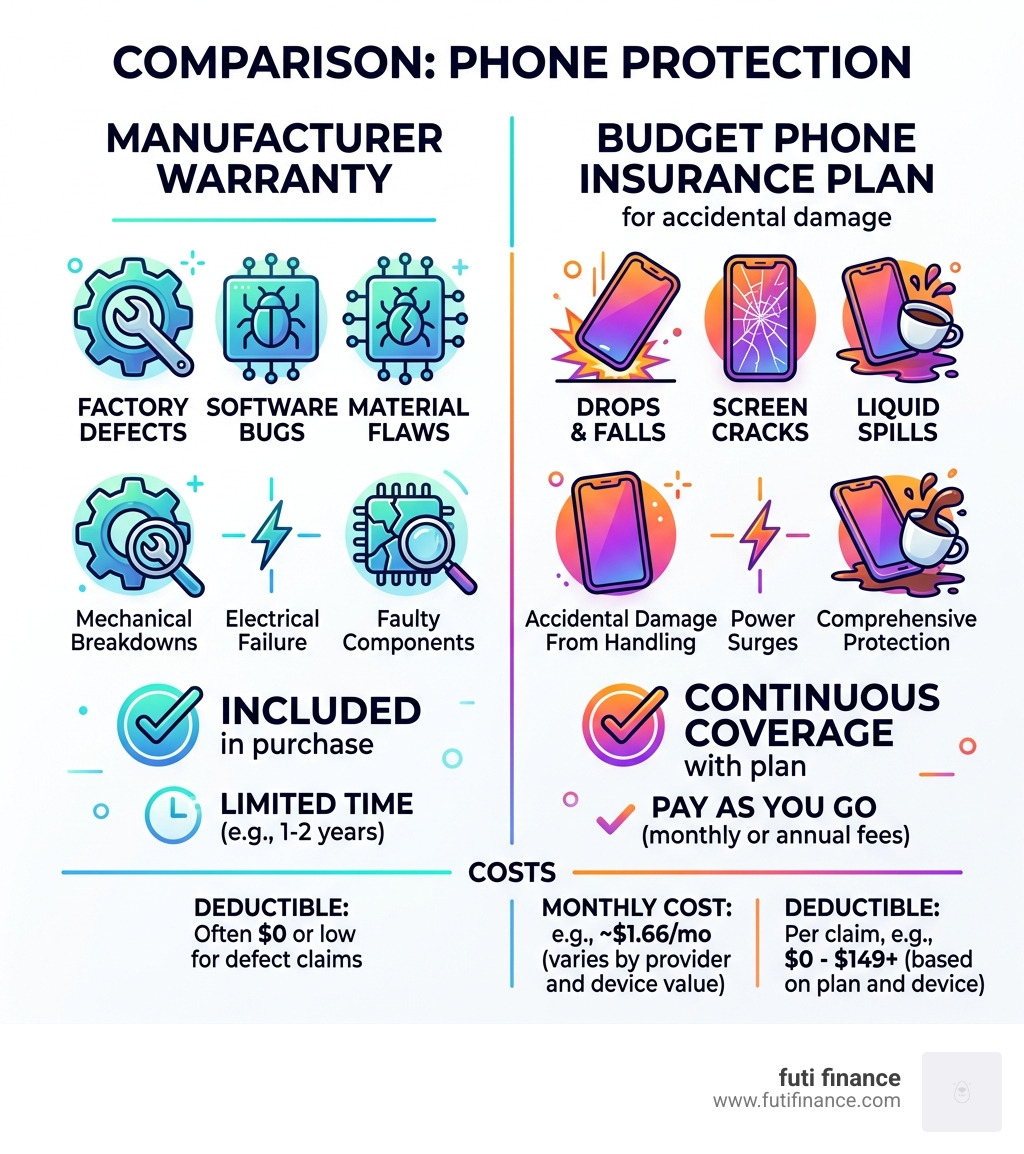
Why Every Student Needs a Budget Phone Insurance Plan
Let’s be real: life as a student is chaotic. You’re rushing between lectures, late-night study sessions, and social events. Your phone is your lifeline, but it’s also constantly at risk.
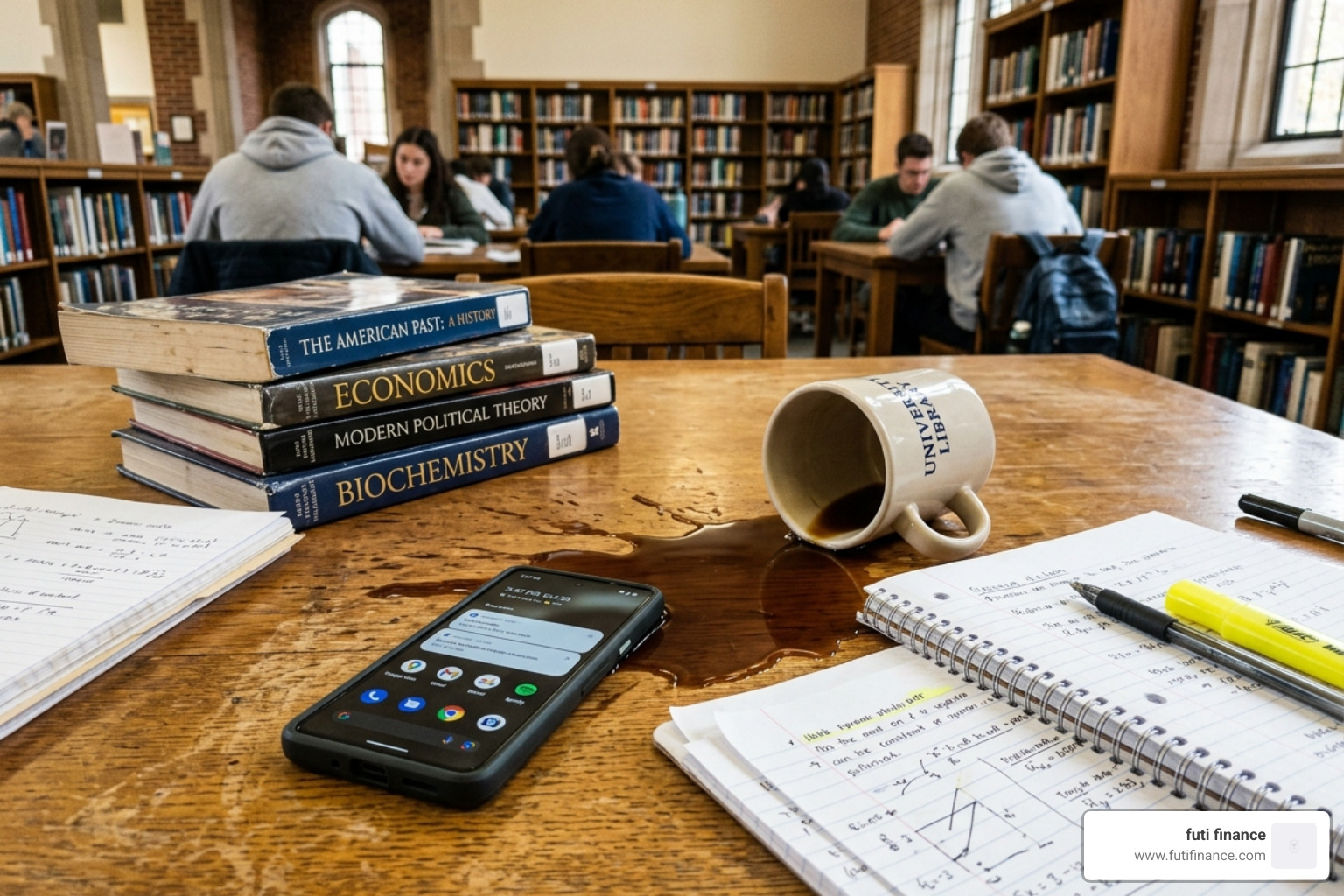
The statistics are staggering. Beyond the 50 million phones that break annually, about 4.3% of employee and student smartphones are lost or stolen every year. If you’re carrying a high-end device, you’re looking at a replacement range of $800 to $1,500. Even a “simple” screen repair for a modern OLED display can easily top $300.
We know that for most students, an unexpected $300 bill is a disaster. A budget phone insurance plan acts as a financial safety net. It shifts the risk from your bank account to the provider. Whether it’s a toddler-level drop in the toilet or a more common “oops, it slipped” moment on the sidewalk, having insurance means you aren’t stuck with a “brick” until your next student loan disbursement.
Coverage often extends to things you might not expect, like power surges from lightning or even natural disasters. When you consider that some plans cost less than a single fancy latte per month, the value proposition is clear: small monthly payments prevent massive, budget-destroying one-time costs. If you want a quick overview of how phone protection differs from a standard warranty, the Wikipedia article on insurance is a useful primer before you compare plan details.
Key Features of Affordable Protection Plans
When you start looking for a budget phone insurance plan, you’ll notice they aren’t all built the same. Some are traditional insurance policies, while others are membership-based repair plans.
| Feature | Membership Plans | Independent Insurance | Carrier Protection |
|---|---|---|---|
| Typical Cost | $20/year | $6–$15/month | $7–$26/month |
| Deductible | Often $0 | $25–$150 | $0–$299 |
| Loss/Theft | Usually Excluded | Often Included | Almost Always Included |
| Repair Type | Local/Partner Shops | Mail-in or Local | Store-based or Mail-in |
| Claim Limits | 1 per year | 2–4 per year | Unlimited (Accidental) |
A good student-friendly policy should cover the “Big Four”:
- Accidental Damage: Drops, cracks, and spills.
- Mechanical Failure: When the charging port stops working or the battery dies after the warranty expires.
- Theft: Because unfortunately, dorm rooms and libraries aren’t always 100% secure.
- Fast Turnaround: You can’t survive two weeks without a phone; you need same-day or next-day solutions.
Finding a Budget Phone Insurance Plan for Used Devices
Many students opt for used or refurbished phones to save money. The good news is that you can still get a budget phone insurance plan for these devices.
Specialized independent providers are particularly friendly toward older models. Typically, the requirements are straightforward: the phone must be in full working condition at the time of enrollment, and you usually need a proof of purchase (like an eBay or Amazon receipt).
Some modern plans use “visual inspection apps.” You’ll be asked to take a photo of your phone in a mirror to prove the screen isn’t already cracked. Once you pass the digital “health check,” you’re covered. This is a game-changer for students who buy a two-year-old iPhone or Pixel and want it to last until graduation.
Comparing Independent vs. Carrier Options

You have two main paths: sticking with your carrier or going with an independent provider.
Independent Providers: These are often the winners for the title of “best budget phone insurance plan.” They aren’t tied to your phone bill, meaning if you switch carriers, your insurance stays with you. Some independent providers offer rates as low as $6–$12 per month and provide multi-device discounts. If you have a phone, a laptop, and a tablet, bundling them with an independent provider is almost always cheaper than buying individual plans from a carrier.
Carrier Plans: Major carriers offer protection programs that range from $7 to $26. While sometimes more expensive, they often include perks like security software, identity theft protection, and $0 screen repairs. For prepaid users, many providers offer fixed costs that are easy to manage alongside a prepaid bill.
Is a Budget Phone Insurance Plan Better Than Self-Insuring?
“Self-insuring” is just a fancy way of saying “I’ll pay for it if it breaks.” To see if this is a bad idea, let’s look at the math.
If you pay $8 a month for insurance over two years, you’ve spent $192. If you crack your screen once and pay a $29 deductible, your total cost is $221. Without insurance, that single repair could cost $320. If your phone is stolen, you’re out $1,000+.
Budget plans also offer “unlimited” claims for accidental damage in some cases. Some programs allow for unlimited screen repairs and battery replacements. If you are “accident-prone” (we won’t judge!), the insurance pays for itself after the very first mishap.
Common Exclusions and Claim Limits
Even the best budget phone insurance plan has “fine print.” You need to know what isn’t covered so you don’t get a nasty surprise during the claims process.
- Intentional Damage: If you throw your phone against a wall in a fit of rage over a bad grade, insurance won’t cover it.
- Cosmetic Wear and Tear: Small scratches on the frame or back glass that don’t affect the phone’s function are usually excluded.
- Unauthorized Repairs: If you let your “techy” roommate try to fix the screen and they break the motherboard, the insurance company will likely deny your claim.
- Software Issues: Viruses and malware are rarely covered.
- Data Recovery: Insurance replaces the hardware, not your photos or files.
Pro Tip: Always set up automatic cloud backups. Insurance gets you a new phone, but it can’t bring back the photos from your spring break trip if you didn’t back them up.
Frequently Asked Questions
How do deductibles impact the true cost of a budget phone insurance plan?
The deductible is the “participation fee” you pay when you make a claim. A “cheap” plan with a $250 deductible might actually be more expensive than a slightly pricier plan with a $29 deductible if you break your phone once a year. Always look at the total cost: (Monthly Premium x 12) + Deductible. For students, low-deductible plans or $0-deductible membership options usually offer the best “true” value.
Can I insure an older phone model in April 2026?
Yes! Most independent providers allow you to insure any phone regardless of age, as long as it is currently in good working condition. Some carrier plans are specifically designed for people bringing older devices to their network.
Does budget insurance cover international travel for students?
Many budget plans offer worldwide coverage. This is huge for students studying abroad. If your phone is stolen in Paris or dropped in Tokyo, you can often get it repaired locally and reimbursed, or have a replacement shipped to you (though shipping times vary).
Conclusion
Choosing a budget phone insurance plan in 2026 is about balancing the monthly cost with the reality of your lifestyle. If you’re a student who lives on coffee and late-night walks across campus, the risk of a spill or a drop is high.
For the absolute lowest cost, membership-based repair plans are unbeatable. For comprehensive protection that includes theft and loss, independent providers offer the best flexibility. If you prefer everything on one bill, carrier options provide a seamless experience.
At Futi Finance, we believe students shouldn’t have to choose between their phone and their groceries. By picking a smart, affordable protection plan today, you’re ensuring that a single “oops” moment doesn’t derail your semester.
