
Beginner’s Guide to Smartphone Insurance
Why Smartphone Insurance Matters More Than You Think
Smartphone insurance is a policy that protects your phone from accidents, theft, and damage that your manufacturer’s warranty won’t cover.
Think about how often your phone leaves your hands. You drop it on the way to class. Your little sibling throws it across the room. You spill coffee on it during a study session.
It happens constantly — and it’s expensive.
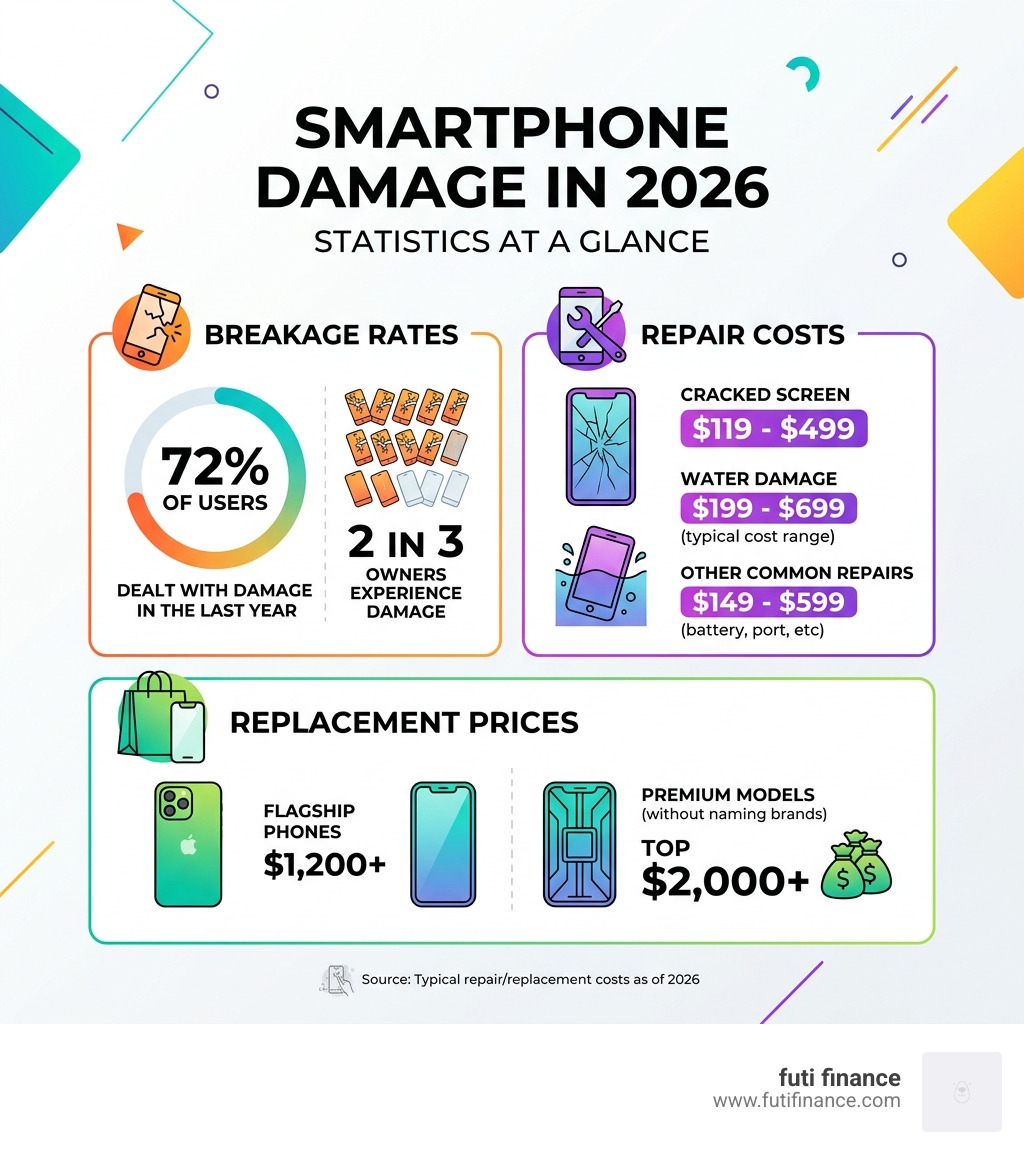
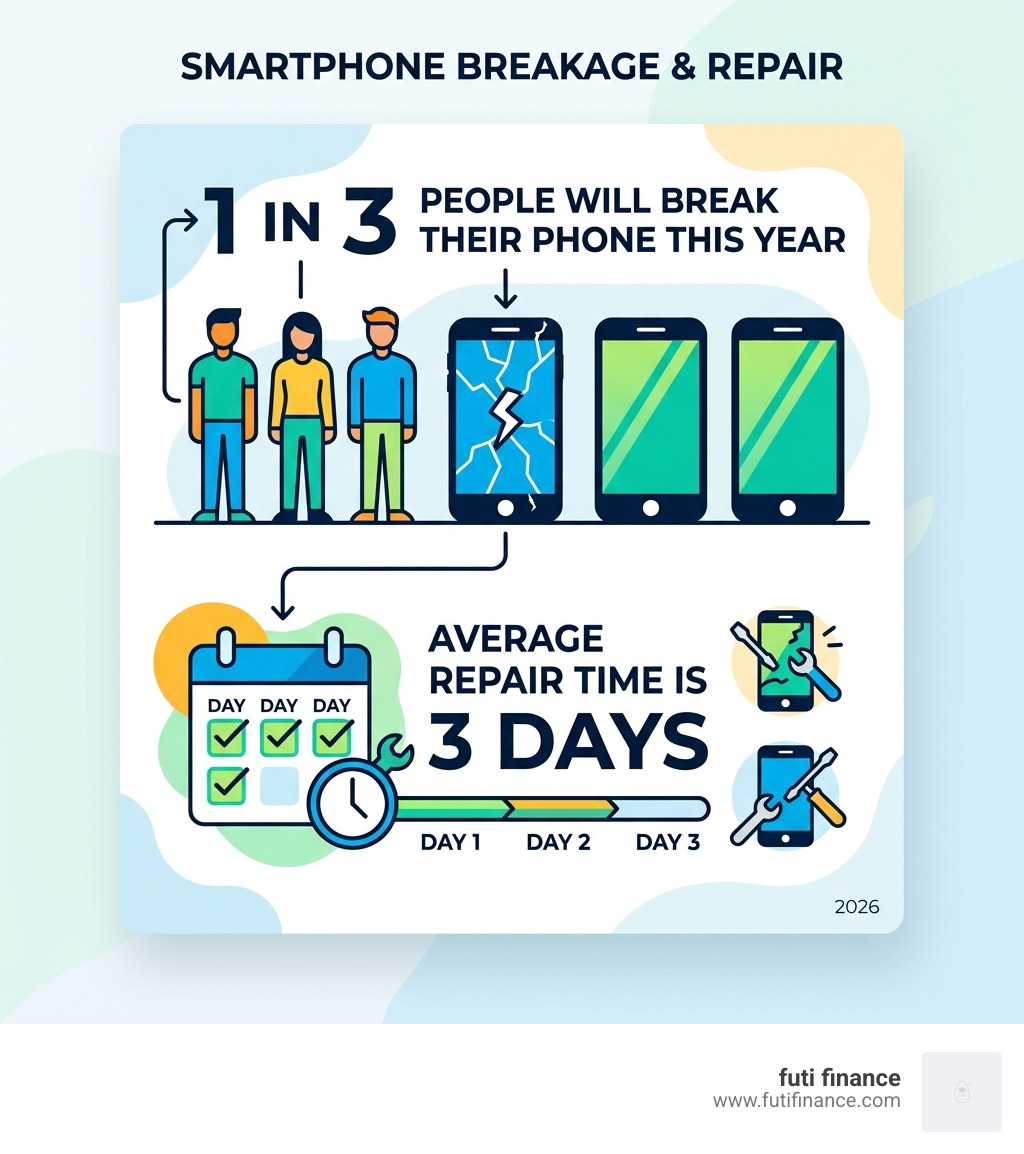
Over 50 million smartphones break every year. In fact, 2 in 3 smartphone owners dealt with some kind of damage in the past year alone. And with flagship phones now retailing for $1,200 or more, a single accident can seriously wreck your budget.
Repairs aren’t cheap either. Without coverage, fixing a cracked screen can run anywhere from $119 to $499. A full replacement? That could top $2,000.
For students and young adults already watching every dollar, that kind of surprise expense isn’t just inconvenient — it can be genuinely destabilizing.
That’s exactly where smartphone insurance comes in.
Understanding Smartphone Insurance vs. Warranties
When you buy a brand-new phone, it usually comes with a manufacturer’s warranty. Many people think this is all the “insurance” they need. Unfortunately, that’s a mistake that can cost you hundreds of dollars.
A manufacturer’s warranty is designed to cover defects. This means if the charging port stops working because of a factory error, or if the software glitches out for no reason, the company will fix it. However, these warranties have a “no-fault” policy. If the damage was caused by you – like a drop or a spill – the warranty is essentially useless.
Smartphone insurance is different. It is specifically designed to cover “life happens” moments. While a warranty covers hardware failure and manufacturer defects for a limited period (usually 12 months), insurance covers the accidental damage that happens in your daily life. Standard warranties don’t care that you tripped on the sidewalk; smartphone insurance does. If you want a basic overview of how insurance works in general, the Wikipedia insurance article is a helpful starting point.
What Does Smartphone Insurance Typically Cover?
Most people think insurance is just for a cracked screen, but high-quality plans go much further. In 2026, a comprehensive policy typically acts as a safety net for several disaster scenarios.

- Accidental Damage: This is the big one. It includes cracked screens, broken buttons, and shattered back glass.
- Liquid Damage: Whether it’s a spill of morning coffee or a full submersion in a pool (or a toilet), insurance has you covered.
- Theft and Loss: Many independent and carrier plans offer protection if your phone is stolen or simply disappears.
- Vandalism and Fire: If your phone is damaged in a house fire or a car break-in, these are typically covered incidents.
- Power Surges: Damage caused by a lightning strike or a faulty charging block is often included.
- Natural Disasters: Events like floods or storms that ruin your tech are usually covered by comprehensive policies.
Common Exclusions and Limitations
Even the best smartphone insurance isn’t a “get out of jail free” card for everything. You need to read the fine print to avoid surprises when you file a claim. Common exclusions include:
- Viruses and Software: Most plans won’t cover damage caused by malware or “bricking” your phone through unauthorized software downloads.
- General Wear and Tear: Scratches on the frame or a battery that naturally loses health over three years usually aren’t covered.
- Unauthorized Modifications: If you tried to fix the phone yourself or took it to an uncertified shop that messed it up, your insurance might be voided.
- Intentional Neglect: If the insurance company finds out you intentionally broke your phone to get an upgrade, they will deny the claim.
- Cosmetic Damage: If the phone still works perfectly but has a tiny scratch on the corner, most insurers won’t pay for a repair.
The Real Cost of Protection: Premiums and Deductibles
Understanding the cost of smartphone insurance requires looking at two numbers: the premium (what you pay monthly) and the deductible (what you pay when you actually break the phone).
Monthly premiums typically range from $7 to $26. The price usually depends on the retail value of your device. A $1,200 iPhone 17 Pro will cost more to insure than a $400 budget Android.
Then there is the deductible. This is a small “service fee” you pay at the time of the repair. For example, some plans offer screen repairs for as low as $0 to $29, while a full replacement for a lost phone might have a deductible of $99 to $249.
| Damage Type | Out-of-Pocket Cost (No Insurance) | Typical Insurance Deductible |
|---|---|---|
| Cracked Screen | $119 – $499 | $0 – $29 |
| Liquid Damage | $300 – $600 | $49 – $99 |
| Stolen Phone | $800 – $1,200+ | $99 – $249 |
At Futi Finance, we believe insurance should be smart and transparent. If you’re looking for more information on how to protect your financial future while staying covered, check out more info about smart insurance.
Choosing the Right Protection Plan for Your Needs
Not all plans are created equal. When shopping for smartphone insurance, consider these factors:
- New vs. Used: Some providers only let you sign up within 30 days of buying a new phone. Others let you protect a phone you’ve owned for years, as long as it’s currently working.
- Refurbished Devices: If you bought a “renewed” phone to save money, make sure the insurer covers refurbished tech.
- Family and Multi-Device Plans: If you have a laptop, a tablet, and a phone, a multi-device bundle is often much cheaper than insuring them separately. Some plans allow you to protect up to 25 items for one flat monthly fee.
- Repair Options: Do you want to go to an official repair center, a local certified shop, or mail your phone away? Look for a provider that offers “same-day” local repair options.
Is Coverage Worth the Investment in 2026?
For many students and young adults, the question isn’t “is it good?” but “is it worth the monthly hit to my bank account?”
Let’s look at the math. If you pay $9 a month for two years, you’ve spent $216. If you crack your screen once in those two years, a $29 deductible brings your total cost to $245. Without insurance, that same repair could cost you $500. You’ve saved $255.
If your phone is stolen — a common risk in high-traffic student environments — the savings are even more dramatic. Replacing a $1,000 phone for a $99 deductible is a lifesaver when you’re living on a student budget.
Beyond the money, there is the peace of mind. Knowing that a spilled drink at a party won’t result in a $600 “repair tax” allows you to actually enjoy your tech. For young adults in high-risk environments (commuters, travelers, or those with active lifestyles), insurance is a vital financial safety net.
Frequently Asked Questions about Smartphone Insurance
How do I file a claim for a damaged phone?
Filing a claim is usually done through an online portal or a dedicated app. You’ll need to provide your policy number and proof of purchase (like a receipt). Once you pay your deductible, you’ll choose a repair option. Some providers offer same-day service at local shops, while others will send you a pre-paid box for mail-in repair. In cases of theft, you will likely need to provide a police report.
Can I buy insurance for a used or refurbished phone?
Yes! While carriers often require you to buy insurance at the moment of purchase, independent providers allow anytime enrollment. You may be asked to take “activation photos” to prove the screen isn’t already cracked. Some plans even offer mechanical protection for older phones, covering battery failures or button malfunctions regardless of the device’s age.
What are the claim limits on most plans?
Most plans have limits to prevent abuse. For example, you might get unlimited accidental damage claims but be limited to one or two theft/loss claims per 12-month period. There is also usually a “total loss cap,” which is the maximum dollar amount the company will pay out in a year (often around $2,500 to $3,500).
Conclusion
Your smartphone is more than just a phone; it’s your map, your bank, your classroom, and your connection to the world. Protecting it shouldn’t be a luxury reserved for people with massive savings accounts.
At Futi Finance, we specialize in providing affordable and intelligent insurance solutions tailored specifically for students and young adults. We understand that you need protection that fits your lifestyle and your budget without the headache of traditional insurance jargon.
Don’t wait until your screen is in pieces to think about protection. Protect your device with Futi Finance and get the smart, tailored coverage you deserve.
