
Don’t Let Your Screen Crack Under Pressure
Your Phone Is One Drop Away From a $1,000 Problem
Mobile protection cover is a monthly plan that pays for your phone repairs or replacement when things go wrong — including accidental drops, cracked screens, liquid damage, theft, and mechanical failures that your warranty won’t touch.
Here’s a quick breakdown of what it typically includes:
- Accidental damage (cracked screens, spills, drops)
- Theft and loss replacement
- Mechanical failure after your warranty expires
- Battery degradation coverage on select plans
- Tech support and sometimes identity theft protection
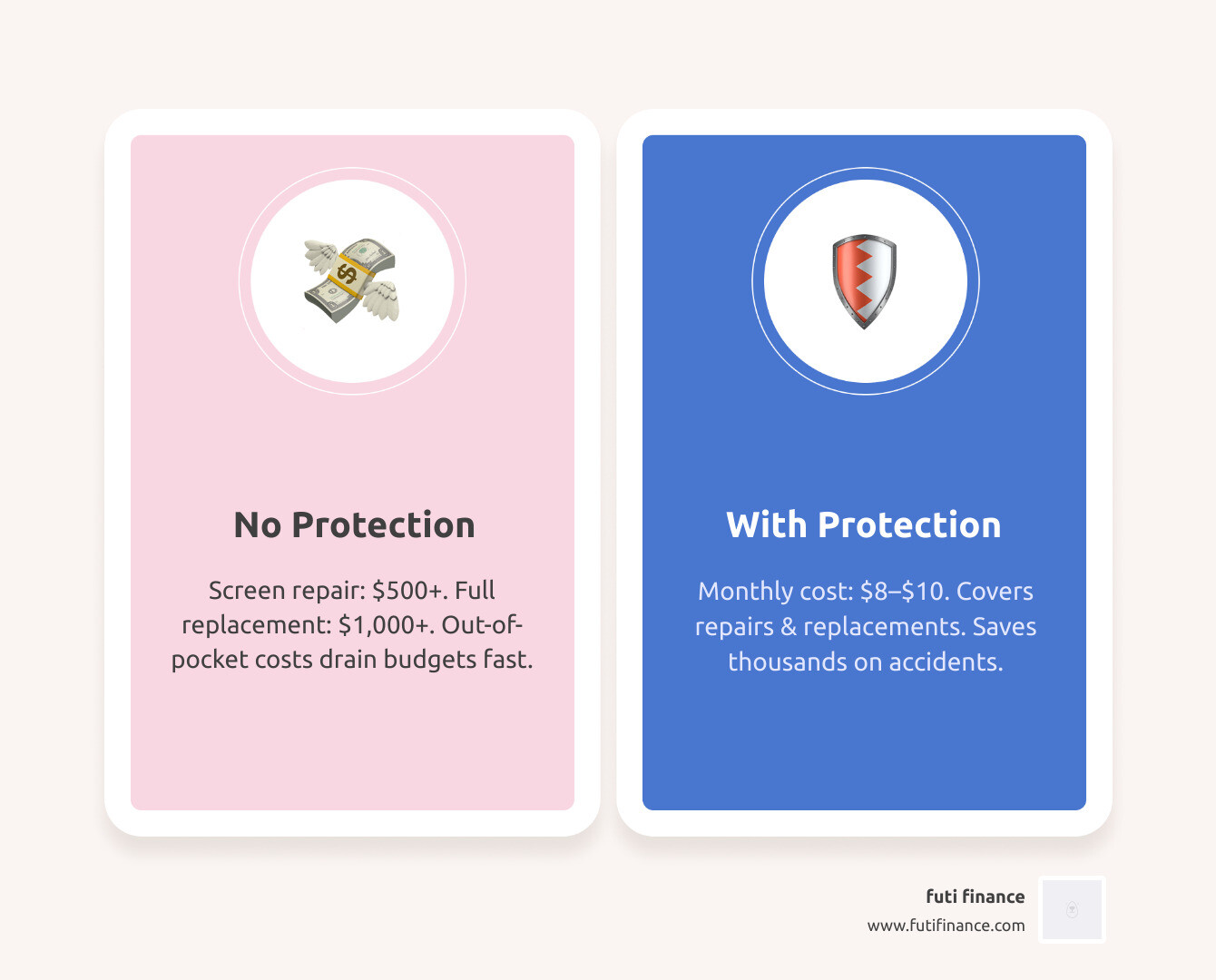
Costs start as low as $8–$10/month, and repairs without coverage can run $500 or more — sometimes over $1,000 to replace a flagship phone entirely.
Think about this: over 50 million smartphones break every year. And 2 in 3 smartphone owners have dealt with some kind of damage in the past year alone. For students and young adults carrying expensive devices on tight budgets, that’s a real financial risk.
A cracked screen isn’t just annoying. Without coverage, it can wipe out your monthly budget in a single afternoon.
That’s exactly why understanding your mobile protection options matters — before something goes wrong, not after.
Understanding Mobile Protection Cover vs. Manufacturer Warranties
When you unwrap a brand-new smartphone, it usually comes with a manufacturer warranty. Many people assume this means they are fully protected. Unfortunately, that is a misconception that often leads to expensive out-of-warranty repair bills.

A manufacturer warranty is designed to cover manufacturing defects – things that are the company’s fault, such as a faulty motherboard, a screen that develops dead pixels on its own, or a button that stops clicking. It does not cover everyday accidents. If you drop your phone on the sidewalk or it slips into the sink, the repair will likely be your responsibility.
This is where mobile protection cover steps in. Unlike a warranty, a protection plan is designed to handle the unexpected. It extends coverage to accidental damage, liquid spills, and even theft or loss, which are not covered by a standard warranty. Furthermore, while warranties usually expire after 12 months, a protection plan can stay with you for the life of the device.
For those looking for more than just a basic safety net, you can learn about standard protection tiers to see how these plans bridge the gap between a manufacturer’s defect and real-world accidents.
What Does Comprehensive Device Insurance Include?
A comprehensive mobile protection cover is like a Swiss Army knife for your digital life. It isn’t just about the screen; it’s about ensuring you aren’t left disconnected from your world.

Modern plans are designed to be exhaustive. We’ve seen that top-tier plans typically bundle several layers of security:
- Theft and Loss: If your phone is swiped from a cafe table or disappears at a music festival, a comprehensive plan will provide a replacement device, often as soon as the next day.
- Mechanical Failure: Once that initial one-year warranty ends, your phone is “naked.” Protection plans cover internal breakdowns that happen in year two, three, and beyond.
- Battery Degradation: If your battery capacity drops below a certain threshold (often 80%), many plans include a free battery replacement to keep your phone running all day.
- Global Coverage: For students studying abroad or young adults traveling, many plans offer protection that follows you across borders.
Accidental Damage and Screen Repair
The most common reason for a claim is, unsurprisingly, the “shattered spiderweb” look. Mobile protection cover specifically targets the most vulnerable parts of your device:
- Cracked Glass: This includes both the front screen and, increasingly, the glass back panels of modern flagship phones.
- Liquid Immersion: Whether it’s a spilled coffee or a full dunk in the pool, liquid damage coverage handles the complex internal cleaning or replacement required.
- Touchscreen Failure: Sometimes the glass is fine, but the digitizer underneath stops responding. Coverage ensures your “swipe” still works.
- Charging Ports and Speakers: Dust, lint, or simple wear and tear can make your phone impossible to charge or hear. These hardware failures are standard inclusions in most protection plans.
Beyond Hardware: Identity Theft and Tech Support
In 2026, our phones are more than just hardware; they are our identities. That’s why modern mobile protection cover often includes “invisible” benefits that are just as valuable as a new screen.
Many premium plans now integrate Identity Theft Protection. This can include up to $1 million in fraud reimbursement and professional identity restoration services if your personal info is compromised. Additionally, having 24/7 access to tech experts (sometimes called “Tech Coaches” or “ProTech”) means you have someone to call when your apps won’t sync or your OS update gets stuck.
If you are curious about how these repairs actually happen, you can explore common device repair options to see the difference between mail-in and same-day services.
Evaluating Costs, Deductibles, and Claim Limits
How much should you actually pay for peace of mind? The cost of mobile protection cover is usually determined by the “tier” of your device. A $1,200 iPhone Pro Max will naturally cost more to insure than a $400 budget Android.
Generally, monthly premiums range from $7 to $26 per month. While that might seem like another subscription to add to the pile, it’s helpful to compare it to the “naked” cost of a repair.
| Feature | Standard Market Plans | Comprehensive Protection |
|---|---|---|
| Monthly Premium | $10 – $15 | $8 – $20 |
| Screen Repair Fee | $29 – $99 | $0 – $29 |
| Replacement Fee | $149 – $250 | $99 – $199 |
| Loss/Theft Coverage | Sometimes | Always |
| Tech Support | Limited | 24/7 Included |
Navigating Deductibles for Your Mobile Protection Cover
A deductible (or service fee) is the out-of-pocket amount you pay when you actually file a claim. It’s important to read the fine print here because not all damages are created equal.
For example, many modern plans have moved toward a $0 deductible for screen repairs. This is a huge win for consumers, as it encourages you to fix that small crack before it becomes a total screen failure. However, if you lose the entire phone or it is stolen, you should expect a higher deductible—often between $99 and $250—to get a brand-new replacement.
Understanding Claim Limits and Annual Caps
Insurance isn’t a “blank check.” Most mobile protection cover providers set limits on how many times you can use the service within a year.
- Unlimited Damage Claims: Some carrier-specific plans now offer unlimited claims for accidental damage.
- Loss/Theft Caps: These are usually more restricted, often capped at 2 or 3 replacements per rolling 12-month period.
- Value Maximums: There is often a “per-claim” limit, such as $2,500 or $3,500, which is more than enough for even the most expensive smartphones on the market in 2026.
How to Choose the Right Plan for Your Lifestyle
Choosing a plan depends heavily on how you live. Are you a student who spends all day on campus, or are you a frequent traveler?
If you are the type of person who needs their phone back immediately, look for plans that offer same-day repairs. Some providers have partnerships with local repair shops where you can walk in and have your screen fixed in two hours. Others offer “Pro On the Go” services where a technician actually comes to your house or dorm to fix the phone in a van outside.
For more details on making the right choice, check out more info about device protection.
Enrollment Requirements for a Mobile Protection Cover
You can’t buy fire insurance while your house is already on fire, and the same applies to phones. Most mobile protection cover plans require you to enroll within a specific window—usually 30 days from the date you purchased or activated the device.
If you miss that window, don’t panic. Some third-party providers allow you to add protection to “existing” devices, provided you pass a quick visual inspection or run a diagnostic app to prove the phone is currently in good working order.
Frequently Asked Questions about Phone Insurance
How do I file a claim for a broken device?
Filing a claim is usually done through a dedicated portal or app. You will need your device’s IMEI number (found in settings), a brief description of what happened, and your proof of purchase. Most claims are approved within minutes, and if you’re getting a replacement, it often arrives the next business day.
Can I add protection to an older smartphone?
Yes! While carriers often stick to the 30-day enrollment rule, third-party insurers are often more flexible. As long as the phone is fully functional and the screen isn’t already cracked, you can typically find a plan for a device that is a year or two old.
What are the most common coverage exclusions?
Even the best mobile protection cover has limits. Common exclusions include:
- Intentional Damage: If you throw your phone against a wall in a fit of rage, that’s on you.
- Cosmetic Wear: Small scratches or scuffs that don’t affect the phone’s function are usually not covered.
- Unauthorized Repairs: If you tried to fix it yourself with a YouTube tutorial and a butter knife, the insurance company might deny your claim.
Conclusion
At Futi Finance, we understand that for students and young adults, a smartphone is more than just a gadget—it’s your classroom, your social life, and your wallet all rolled into one. A sudden $500 repair bill isn’t just a nuisance; it can be a genuine financial setback.
We believe in smart, tailored insurance solutions that fit your lifestyle. By choosing the right mobile protection cover, you aren’t just protecting a piece of glass and metal; you’re protecting your peace of mind and your financial independence. Don’t wait for the sound of glass hitting pavement to think about insurance. Protect your tech today and stay connected to what matters most.
