Stop Paying Too Much for Phone Insurance
The Best Phone Insurance for Young Adults: A Quick Comparison
The best phone insurance for young adults comes down to a handful of standout options that balance low monthly costs, reasonable deductibles, and solid coverage for the things that actually happen – drops, spills, theft, and cracked screens.
Here’s a quick look at the top picks by category:
| Plan Type | Monthly Cost | Deductible | Best For |
|---|---|---|---|
| Specialized Tech Insurance | $6 – $12 | $29 – $99 | Best rates + multi-device |
| Value-Focused Plans | From ~$8 | From $50 | Best overall value |
| Standard Carrier Protection | $7 – $26 | Varies by device | Convenience |
| Rapid-Response Plans | $12 – $15 | $29 – $499 | Fast claims |
| Family/Bundle Plans | $8.99 – $19.99 | $149 | Multiple users |
Your phone probably cost close to $1,000. Maybe more.
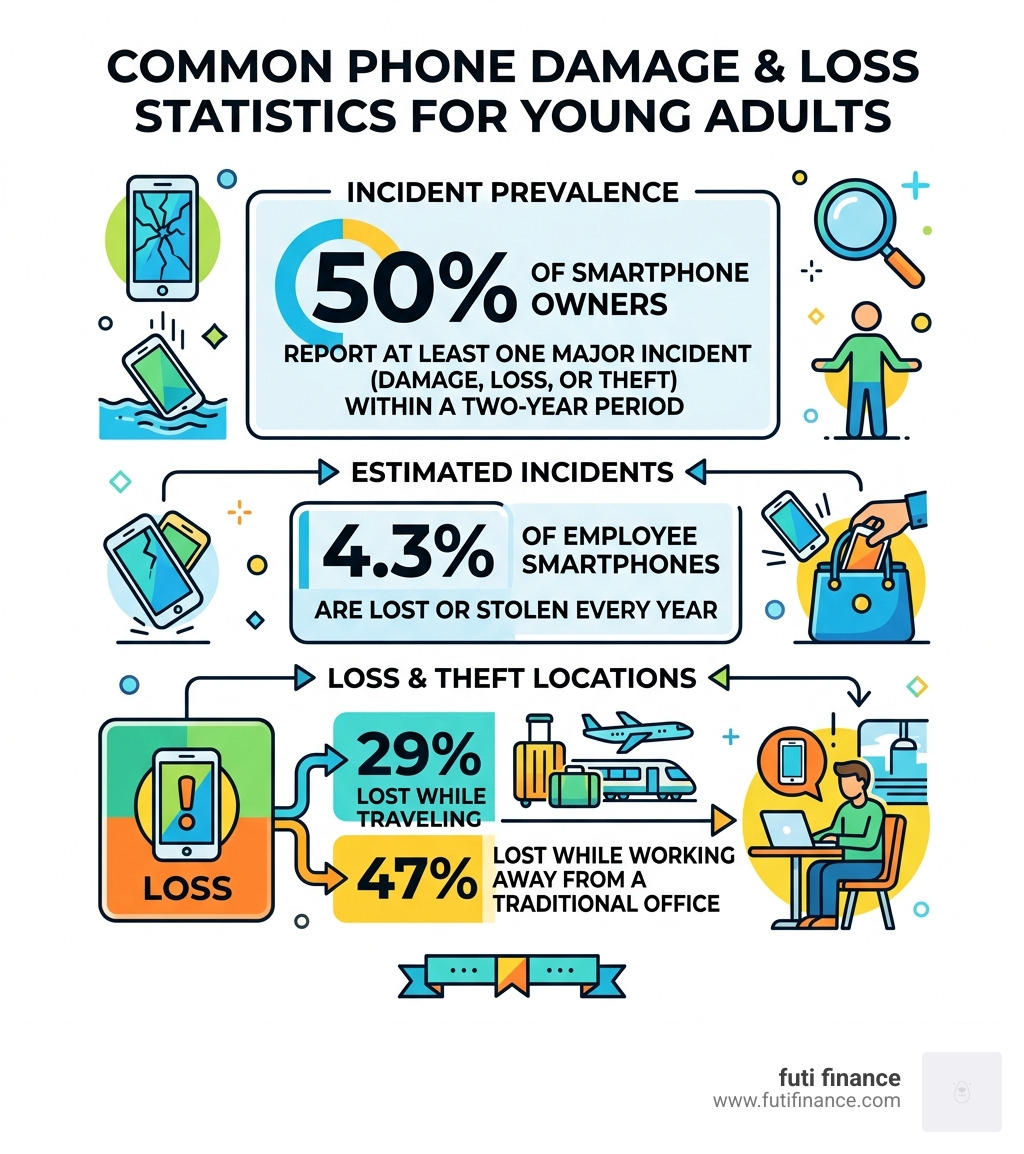
And yet, dropping it on concrete or spilling coffee on it is all it takes to face a repair bill that could wipe out a week’s worth of rent money. About 50% of smartphone owners report at least one major phone incident – damage, loss, or theft – within any two-year period, according to data from Consumer Reports.
For young adults living on tight budgets, that kind of surprise expense hits especially hard.
The good news? You don’t have to overpay for protection. Phone insurance can cost as little as $8 a month – and the right plan could save you hundreds when something goes wrong.
This guide cuts through the noise and compares the best options built for your life and your budget.
Why Young Adults Need the Best Phone Insurance
Let’s be real: our phones aren’t just for calling anymore. They are our wallets, our maps, our cameras, and our connection to the world. As we move through April 2026, the price of these pocket computers has skyrocketed. Whether you’re rocking the latest iPhone 15 or a high-end Android flagship, you’re essentially carrying a fragile $1,000 glass sandwich everywhere you go.
For young adults, the risks are everywhere. You’re commuting to work on a crowded train, studying in a busy campus coffee shop, or traveling on the weekend. Statistics show that an estimated 4.3% of employee smartphones are lost or stolen every year. Even more telling is where it happens: about 29% are lost while traveling, and a whopping 47% are lost while working away from a traditional office.
The “Fiasco” Factor
If you think “it won’t happen to me,” the data says otherwise. In a survey of over 5,200 smartphone owners, half of them reported a major “smartphone fiasco” in the previous 24 months. We’re talking about cracked screens (the most common repair), liquid damage (the classic “dropped in the toilet” or “spilled ramen” scenarios), and outright theft.
For those with young children at home – or even just a clumsy roommate – the risk jumps. About 81% of people with young children reported at least one phone lost or damaged in two years.
Financial Independence and Protection
When you’re just starting out, building financial independence is a priority. A sudden $350 bill to fix a cracked screen or an $800 bill to replace a stolen phone can derail your savings goals. This is where best phone insurance young adults becomes a smart strategic move. Instead of “self-insuring” (which is just a fancy way of saying “hoping for the best”), a small monthly premium provides a safety net.
If you want background on how common accidental breakage is, Wikipedia’s mobile phone article offers a useful overview of how central smartphones have become in everyday life – and why protecting them matters.
We believe that insurance should be intelligent. It shouldn’t just be an extra bill; it should be a tool that protects your hard-earned money from the “uh-oh” moments of life.

Comparing Coverage and Costs
When you’re looking for the best phone insurance young adults can actually afford, you have to look past the monthly price tag. You need to understand what you’re getting for your money. Not all plans are created equal, and some “cheap” plans have deductibles so high they’re practically useless.
Essential Coverage in the Best Phone Insurance for Young Adults
What should a solid plan cover? At a minimum, you want protection against:
- Accidental Damage: This includes those spiderweb cracked screens and corner dents from drops.
- Liquid Submersion: Whether it’s a coffee spill or a puddle, liquid damage can fry your phone’s internals.
- Theft and Loss: Only about 7% of stolen smartphones are ever recovered. You need a plan that replaces the device if it’s gone for good.
- Mechanical Breakdown: Once your 12-month manufacturer warranty expires, who pays if the charging port just stops working? Good insurance should cover this.
- Worldwide Coverage: If you’re studying abroad or backpacking, you need your protection to follow you.
| Feature | Major Carrier Plans | Specialized Third-Party Providers |
|---|---|---|
| Avg. Premium | $14 – $26/month | $6 – $12/month |
| Screen Deductible | $0 – $29 | $29 – $75 |
| Theft Deductible | $99 – $279 | $75 – $99 |
| Claim Limits | Often unlimited (damage) | 2-3 per year (varies) |
Understanding Deductibles and Claim Limits
The deductible is the amount you pay out-of-pocket before the insurance kicks in. For example, if your screen repair costs $250 and your deductible is $29, you pay $29 and the insurer pays $221.
However, be wary of claim caps. Some plans might limit you to two claims every 12 months. If you’re particularly “accident-prone,” you’ll want a plan with higher limits. Also, keep in mind that most insurers will send you a refurbished replacement rather than a brand-new phone. This is standard across the industry, but it’s why we recommend documenting your phone’s condition early on.
If you’re looking for more details on how to tailor your protection, you can find more info about insurance services to help you decide.
Affordable Alternatives to Traditional Carrier Plans
Most people just sign up for insurance at the wireless store when they buy their phone. It’s convenient, but it’s often the most expensive way to do it. Carriers often “pad their bottom lines” with these plans, charging up to $26 a month.
Specialized Third-Party Providers
Third-party providers offer much better rates because they use technology to keep overhead low. For example, some plans allow you to protect your phone for as little as $6 to $12 a month.
Multi-Device Bundles: The Student Secret
This is where young adults can really save. Instead of paying for separate insurance for your phone, your laptop, and your tablet, you can use a Bundle Plan. Some providers allow you to protect one phone plus up to 25 other items (like your MacBook, iPad, gaming console, and even your bike or headphones) for one flat monthly fee, usually around $15.
For a student, this is a game-changer. You’re protecting your entire “tech stack” for the price of a couple of lattes. This avoids the expensive carrier markups and gives you comprehensive protection for all the gear you rely on for school and work.

Smart Strategies for Budget-Conscious Students
Being a student often means living on a “ramen-budget.” Every dollar counts. To get the best phone insurance young adults can find, you need to be a little strategic.
Maximizing Value
- Look for No-Contract Policies: Your life changes fast. You don’t want to be locked into a two-year insurance contract. Choose plans that let you cancel or change anytime.
- Easy Digital Claims: You don’t want to spend hours on the phone. The best modern providers let you file a claim through an app or website 24/7. Some even offer payouts via PayPal or virtual cards “before your coffee gets cold.”
- Transparent Terms: Avoid the “sneaky fine print.” Make sure you know exactly what your deductible is for theft versus a simple screen crack.
Protecting Used and Refurbished Devices
Many young adults buy secondhand phones to save money. Most carrier insurance plans won’t cover these. However, specialized third-party insurers will. As long as the phone is functional and undamaged when you sign up, you can get full protection.
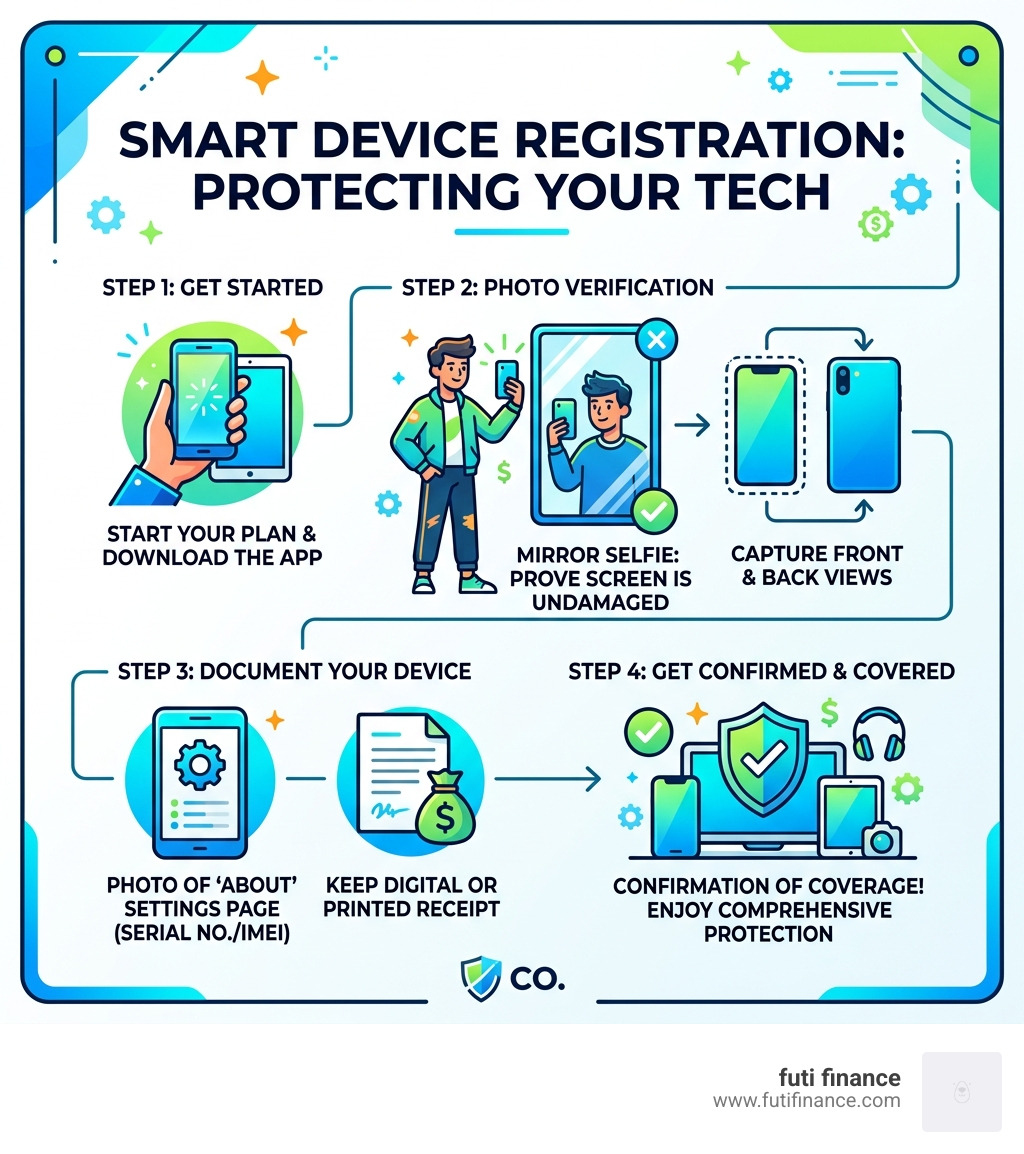
The Registration Process: To make sure your claim goes smoothly later, you need to document your device now.
- Photo Verification: You’ll likely need to take a “mirror selfie” with your phone to prove the screen isn’t already cracked.
- The “About” Page: Take a photo of your settings page showing the serial number and IMEI.
- Receipts: If you bought it new, keep that digital receipt!
Frequently Asked Questions about Phone Protection
Is phone insurance worth it for older models?
It depends on your “emergency fund.” A good rule of thumb: if you have at least $1,500 in savings specifically for emergencies, you might be able to “self-insure” an older phone. But if a $400 replacement cost would cause you stress or force you to use a credit card, insurance is worth the small monthly fee, even for older models.
What is the difference between a manufacturer warranty and insurance?
This is a big one. A warranty (like the standard 12-month one from Apple or Samsung) only covers manufacturer defects – like if the battery dies for no reason or the software glitches. It does not cover you if you drop the phone in a pool or if someone steals it from your bag. Insurance covers those “accidental uh-ohs.”
How many claims can I file per year?
Most plans have a limit. Carrier plans often allow for unlimited accidental damage claims but limit theft/loss claims (some major providers, for instance, limit loss/theft to five per year). Third-party “bundle” plans might have an aggregate dollar limit per year (e.g., $4,000 total across all devices). Always check the “Claim Caps” section of your policy.
Conclusion
At the end of the day, the best phone insurance young adults can choose is the one that fits their specific lifestyle and budget. You don’t need the most expensive plan on the market; you just need a smart one.
At Futi Finance, we’re dedicated to providing affordable and intelligent insurance solutions tailored specifically for students and young adults. We know that your tech is your lifeline, and we believe protecting it shouldn’t break the bank. By choosing a third-party provider, bundling your devices, and staying informed about your coverage, you can stop overpaying and start living with peace of mind.
Don’t wait for the “spiderweb” to appear on your screen. Protect your tech today and keep your financial future on track.
