
How to Insure Your Campus Tech Without Going Broke
Your Campus Tech Is One Spill Away From a Costly Bill
A college laptop protection policy is a plan — offered by your university, a third-party insurer, or both — that covers repair or replacement costs when your laptop is accidentally damaged, stolen, or malfunctions beyond what a standard manufacturer warranty allows.
Here’s a quick look at your main options:
| Protection Type | What It Covers | Typical Cost | Deductible |
|---|---|---|---|
| University plan (e.g., Laptop Guard) | Theft, spills, accidental damage, parts & labor | ~$40/semester | $0 |
| Third-party insurance | Accidental damage, theft, power surges | ~$12/month | $49+ |
| Manufacturer warranty | Hardware defects only | Included | Varies |
| Renters/homeowners insurance | Theft (sometimes) | Varies | Often $500+ |
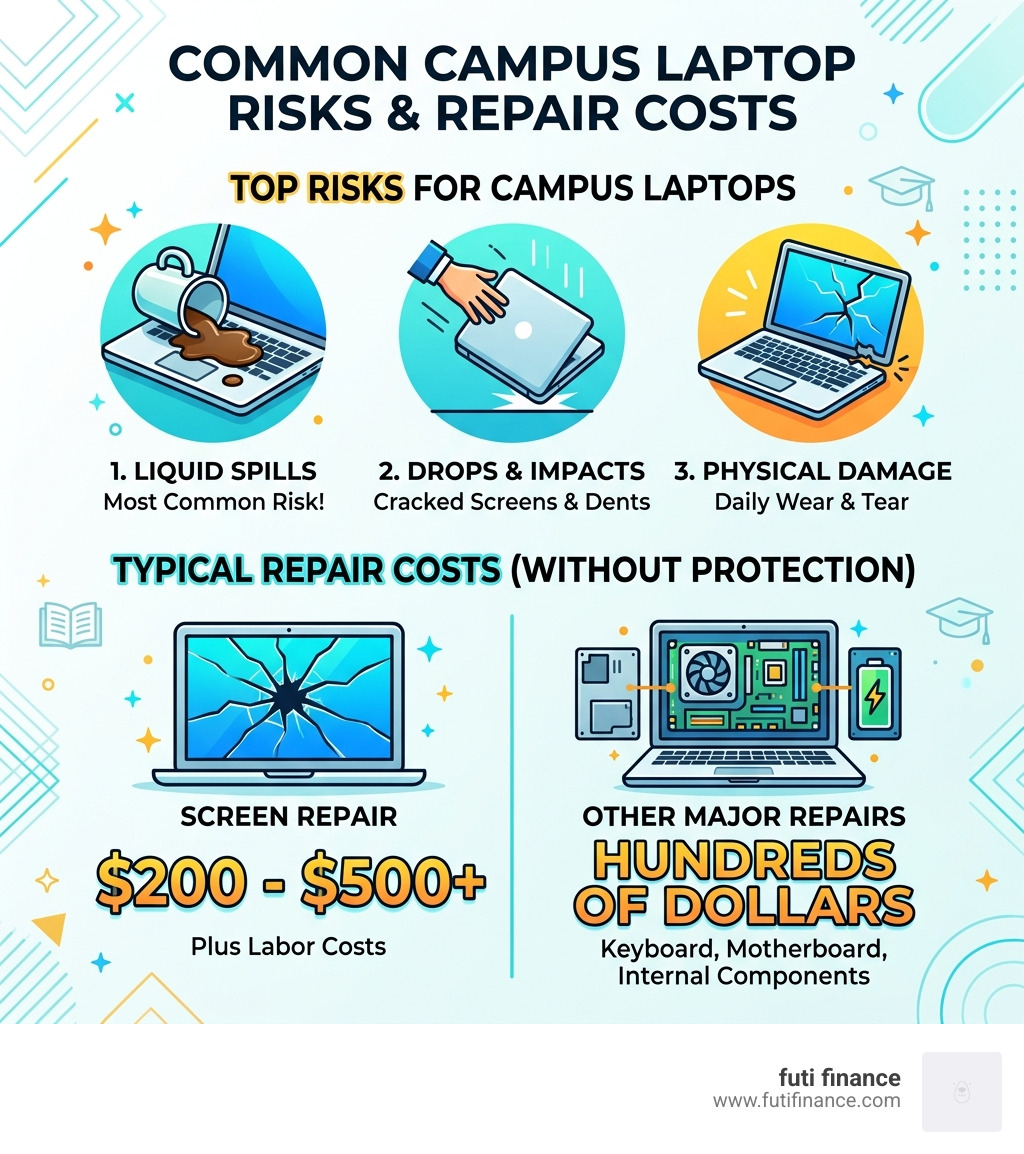
Think about this: nearly one in three college students damages their laptop or its accessories in a given year. The most common culprit? Liquid spills. And a single spill can cost hundreds of dollars to fix out of pocket — without any protection plan in place.
Screen repairs alone can run $200 to $500, not counting labor. The average laptop insurance claim pays out just under $650. For a student on a tight budget, that’s a serious hit.
The good news is that there are real, affordable options — from university-managed plans with no deductibles to private insurers charging less than the cost of a streaming subscription each month. The tricky part is knowing which plan actually fits your situation, and which ones leave dangerous gaps.
This guide compares the most common campus tech protection plans side by side, so you can make a smart, informed choice — without overpaying or getting caught off guard.
Understanding Your College Laptop Protection Policy
When you step onto campus in April 2026, your laptop is your lifeline. It’s your textbook, your notebook, and your connection to the world. Because of this, many institutions have moved from “suggesting” you have a computer to making it a mandatory requirement. For instance, the UC Merced Student Rights and Responsibilities page notes that all incoming freshmen and transfer students must own a personal laptop that meets specific minimum specifications.
However, owning the device is only half the battle. You also have to protect it. A typical college laptop protection policy outlines exactly who is responsible when things go sideways. If you are using a university-issued device, don’t let the “issued” part fool you into thinking the school picks up the tab for your accidents.
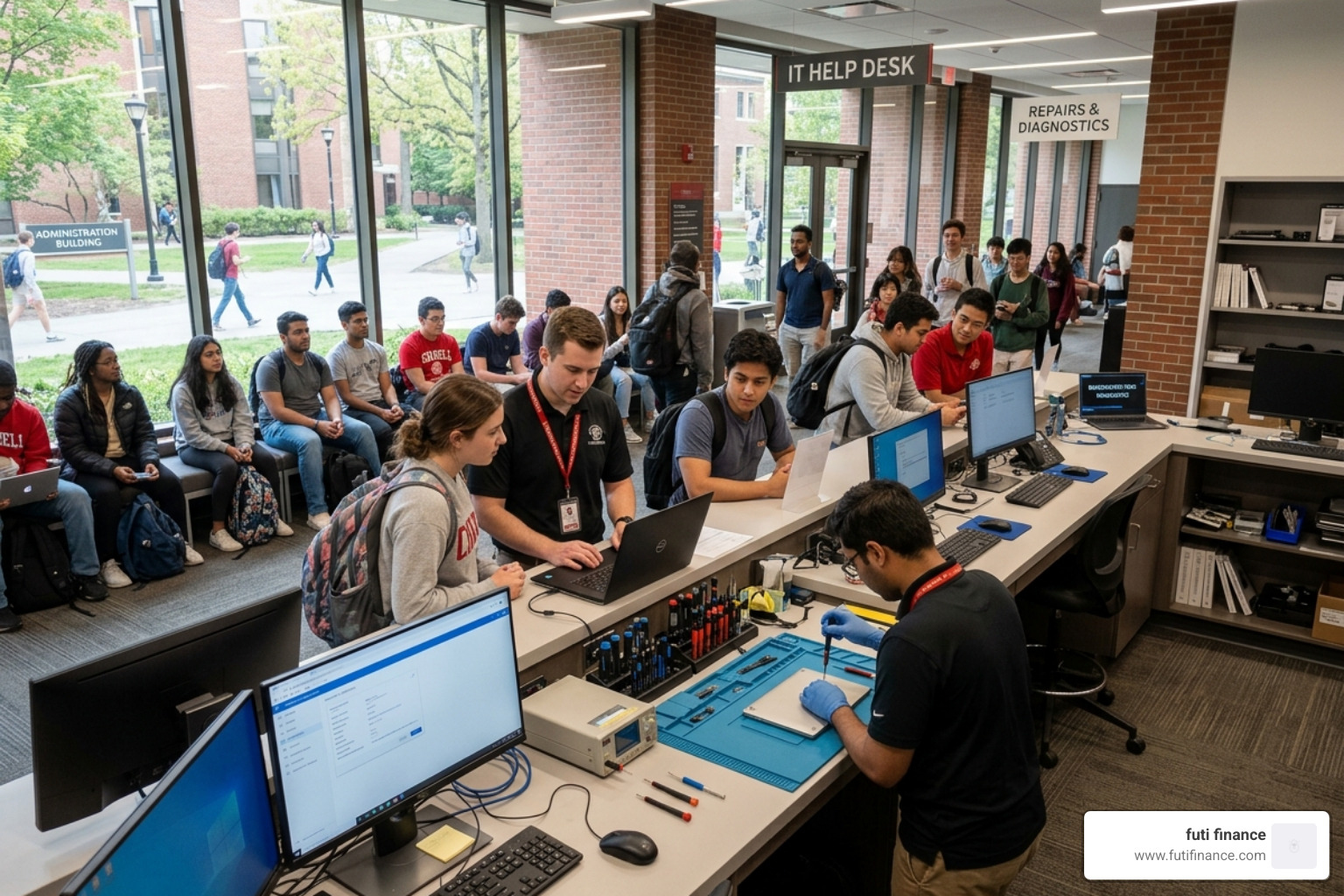
According to the NMU Laptops-Student Responsibility guidelines, students are held financially liable for repair costs stemming from misuse or damage. At many schools, this includes a standard $75 fee for accidental damage and a whopping $500 fee for theft if you haven’t opted into a specific protection plan.
Even if you aren’t “issued” a long-term laptop, short-term rentals carry heavy weight. The Laptop Policy at many university libraries states that patrons are responsible for the full replacement cost of the device plus processing fees (often around $15) if the laptop is lost, stolen, or damaged while in their care.
Common Exclusions in a College Laptop Protection Policy
We’ve all seen the fine print, but in campus tech, that fine print can be the difference between a free repair and a $500 bill. Most policies have a list of “no-go” zones where coverage simply won’t apply.
The Siena University Security Policy emphasizes that caretakers are personally responsible for devices everywhere, not just on campus. Common exclusions include:
- Neglect: Leaving your laptop in an unlocked car or a busy cafeteria.
- Mysterious Disappearance: If you simply “lost” it but can’t prove it was stolen, most plans will deny the claim.
- Intentional Damage: If you throw your laptop in a fit of finals-week rage, you’re on your own.
- Software and Viruses: Policies generally cover the hardware, not the “blue screen of death” caused by a shady download.
- Cosmetic Scratches: If it still works but looks a bit beat up, insurance usually won’t pay for a “prettier” casing.
- Unauthorized Repairs: Trying to be a DIY hero or taking it to a non-approved shop can void your university protection.
Student Liability and Financial Responsibility
Liability is a fancy word for “you broke it, you bought it.” Under most university agreements, you are the “caretaker” of the device. This means if you lose the charger, you don’t just get a new one for free. You’ll likely be charged the market price for missing accessories.
At Winona State University, for example, students who don’t have “Laptop Guard” protection are assessed repair fees that can increase incrementally with each incident. Without coverage, a stolen laptop results in a $500 charge to your student account. It’s a steep price for a lesson in security, which is why we always recommend checking if your school offers a subsidized protection plan during orientation.
Manufacturer Warranty vs. Comprehensive Protection
It’s a common misconception: “I have a warranty, so I’m covered.” Unfortunately, a standard manufacturer warranty is like a life vest that only works if the boat has a factory defect. If you jump into the water (or spill coffee on the keyboard), that warranty stays on the boat.
| Feature | Manufacturer Warranty | Comprehensive Protection (Insurance) |
|---|---|---|
| Hardware Defects | Yes | Yes |
| Screen Cracks (Drops) | No | Yes |
| Liquid Spills | No | Yes |
| Theft | No | Yes |
| Power Surges | No | Yes |
| Average Claim Payout | N/A | $648.95 |
The reality of campus life is that most damage isn’t the manufacturer’s fault. It’s the result of being a busy student. Spills are the number one cause of laptop death on campus, and they aren’t covered by AppleCare or Dell’s standard warranty. When you consider that a hard drive replacement can cost $100–$300 and a new keyboard can run $200–$300, the “free” warranty starts looking very limited.
Comparing University Plans and Private Insurance
If you’ve decided that “going naked” (technically speaking) with your tech is too risky, you have two main paths: the university-sponsored plan or a private third-party policy.

University-Sponsored Coverage (e.g., Laptop Guard)
Many schools offer an internal plan like Winona State’s “Laptop Guard.” These are often the most convenient options because:
- Cost: They are usually affordable, often around $40 per semester or less.
- No Deductibles: Unlike private insurance, these often have $0 deductibles for repairs.
- On-Campus Support: You just walk into the campus tech center, and they handle the claim and the repair in one spot.
- Prorated Plans: If you graduate early or start mid-year, the costs are often adjusted.
Private Insurance (Third-Party)
Many private insurance providers offer specialized student tech insurance. These are great if:
- You Own Your Tech: If you bought your own high-end MacBook Pro, a private plan might offer higher reimbursement limits (up to $2,000).
- Worldwide Coverage: If you’re studying abroad, private plans often cover you globally, whereas some university plans stop at the campus edge.
- Multi-Device Bundling: Some providers let you protect your phone, laptop, and gaming console under one monthly fee.
How to Evaluate a Third-Party College Laptop Protection Policy
Not all private plans are created equal. When we look at the market for our members at Futi Finance, we look for these four “Must-Haves”:
- Reimbursement Limits: Ensure the “cap” is higher than the replacement cost of your laptop. A $2,000 limit is standard for most students.
- Claim Turnaround Time: You can’t wait three weeks for a laptop repair during midterms. Look for providers that offer “fast-track” repairs or local shop authorizations.
- Deductible Options: While $0 is best, a $50 deductible is a fair trade-off for a lower monthly premium.
- Expert Support: 24/7 support is vital. If your laptop dies at 2:00 AM while you’re finishing a paper, you need to know the next steps immediately.
Prevention and Reporting: What to Do When Disaster Strikes
Even the best college laptop protection policy won’t help you if you don’t follow the rules of reporting. If your laptop is stolen, most insurers—including university plans—require a police report to be filed within a very tight window (usually 5 days).
Step-by-Step Disaster Protocol:
- Report to Authorities: If stolen, call campus security or local police immediately. Get a case number and a physical copy of the report.
- Notify the School/Insurer: Contact your tech support center or insurance agent within 24–48 hours.
- Provide the Serial Number: Always keep a photo of your laptop’s serial number on your phone or in the cloud. You can’t file a claim without it.
- Remote Wipe: If you have “Find My Mac” or similar tracking enabled, use it—but do not attempt to recover the device yourself.
Prevention Tips for the Proactive Student:
- The “Purse Rule”: NMU suggests treating your laptop like a wallet. You wouldn’t leave your wallet on a library table while you go grab a latte; don’t leave your laptop there either.
- Security Cables: Use a laptop lock cable to tether your device to a desk in your dorm or the library.
- Cloud Backups: Insurance replaces the metal and plastic, but it doesn’t replace your 20-page thesis. Use automated cloud storage to ensure your data is safe even if the hardware is smashed.
Frequently Asked Questions about Campus Tech Insurance
Is laptop insurance worth it for a used or refurbished device?
Absolutely. In many cases, it’s more important. Older devices are more prone to mechanical failure, and used laptops often lack any remaining manufacturer warranty. Many private insurance providers offer protection for used and refurbished tech, which can save you from a total loss if an old battery swells or a screen flickers out.
Does a college laptop protection policy cover stolen chargers and accessories?
It depends on the plan. Winona State’s Laptop Guard covers cord damage and charger theft (with a police report), but not “mysterious loss.” Most private third-party plans focus on the main unit and may require an additional rider or a separate deductible for accessories. Always check if “peripherals” are included in your specific policy.
Can I get a refund on my protection plan if I graduate early?
University plans like Laptop Guard often offer a full refund within the first 30 days if no claims have been filed. For private insurance, most are billed monthly, so you can cancel at any time. If you paid for a multi-year plan upfront, you might be eligible for a prorated refund, but you’ll need to check the “Cancellation” section of your specific agreement.
Conclusion
Navigating campus life is hard enough without worrying about a $600 repair bill for a split-second accident. Whether you choose a university-managed plan for its simplicity or a private policy for its broad coverage, the key is to have something in place before the first coffee spill happens.
At Futi Finance, we believe in smart, affordable insurance that actually fits the way you live. We know that as a student, every dollar counts, and peace of mind shouldn’t cost a fortune. By understanding your college laptop protection policy and picking a plan that bridges the gap between your warranty and reality, you can focus on what really matters: passing your classes and enjoying the ride.
