
Don’t Let a Leaky Pipe Sink Your Semester
Why Water Damage is the #1 Threat to Your Dorm Life
Student dorm water damage insurance is the coverage that protects your laptop, phone, clothes, and other belongings when a burst pipe, overflowing sink, or leaking sprinkler system turns your room into a disaster zone.
Here’s a quick breakdown of your main options:
| Coverage Type | Best For | Typical Personal Property Limit | Covers Accidental Spills? |
|---|---|---|---|
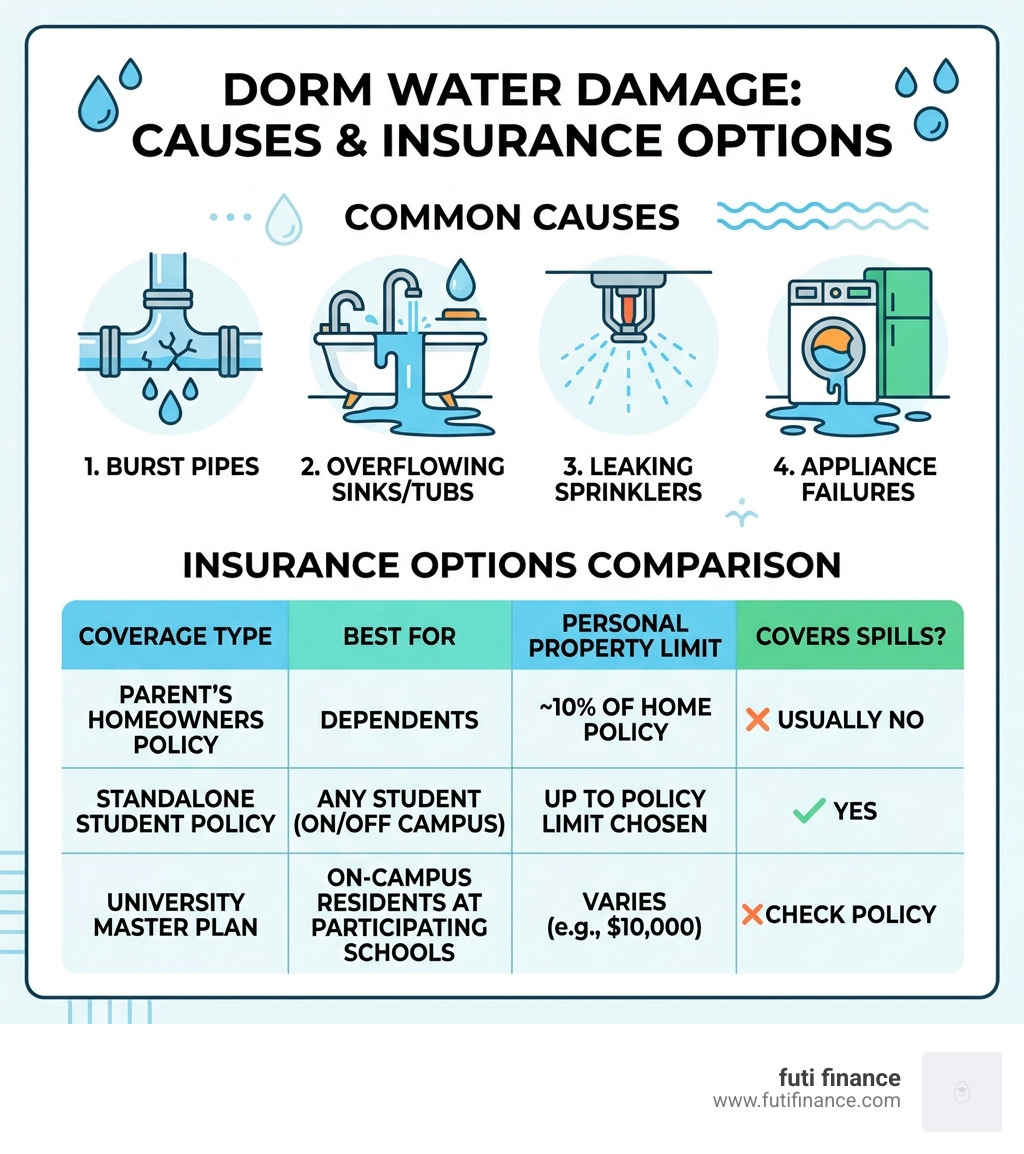
| Parent’s homeowners policy | Dorm students still living as dependents | ~10% of home policy limit | Usually no |
| Standalone student policy | Any student, on or off campus | Up to policy limit chosen | Yes |
| University master plan | On-campus residents at participating schools | Varies (e.g., $10,000) | Check policy |
The short answer: A parent’s homeowners policy may cover your dorm belongings, but the limits are low and common causes like liquid spills are often excluded. A dedicated student insurance policy fills those gaps — and usually costs less than $20 a month.
Now here’s why this matters more than most students realize.
Water damage is responsible for one in every five property insurance claims in the United States, adding up to roughly $13 billion in losses every year. And dorms are especially vulnerable. Old plumbing, shared bathrooms, in-unit laundry, and — let’s be honest — inexperienced residents create the perfect conditions for leaks and floods.
A single incident can destroy hundreds or thousands of dollars worth of electronics and personal belongings in minutes. One real-world university case saw a water damage claim balloon from $2.7 million to an estimated $40–50 million once mold remediation, lost income, and relocation costs were factored in. That was just the building. Imagine what the students inside lost.
And with student housing construction up more than 88% in the past year, more students than ever are moving into complex new buildings packed with plumbing — which means more risk, not less.
The good news? The right insurance makes this a manageable problem instead of a semester-ruining one.
The Hidden Risks of Campus Living
In April 2026, the demand for student housing is at an all-time high. Modern dorms are no longer just concrete boxes; they feature private bathrooms, kitchenettes, and high-end amenities. While these make life better, they also multiply the number of pipes and appliances that can fail.
Common causes of water damage in dorms include:
- Burst Pipes: Especially in older residence halls during winter freezes.
- Sprinkler System Discharge: Often triggered by accidental heat or a stray frisbee.
- Student Negligence: Leaving a faucet running or failing to report a small leak until it becomes a flood.
- Old Infrastructure: Corroded pipes in historic campus buildings.
- Overflowing Sinks/Toilets: Shared plumbing systems are prone to clogs.
Beyond the immediate destruction of your MacBook or favorite sneakers, water damage often leads to mold growth, which can render a room uninhabitable and lead to the displacement of students for weeks or even months.
Comparing Your Options for Student Dorm Water Damage Insurance
When you’re trying to figure out how to protect your stuff, you’ll likely encounter three main paths. Each has its pros and cons, especially regarding deductibles and what exactly counts as a “covered peril.”
| Feature | Parent’s Homeowners Policy | Standalone Student Policy | University Master Plan |
|---|---|---|---|
| Personal Property | Limited (usually 10%) | Up to your chosen limit | Fixed amount (e.g. $10k) |
| Liability Coverage | Included | Included | Included |
| Deductible | High ($500 – $2,500+) | Low ($25 – $100) | Standard ($500) |
| Replacement Cost | Varies | Yes (Full cost to replace) | Yes |
| Accidental Damage | Rarely | Yes (Spills/Drops) | Usually not |
| Primary/Secondary | Secondary | Primary | Primary |
The 10% Rule: Student Dorm Water Damage Insurance via Parent’s Policy
Many parents assume their existing homeowners policy has their student covered. While there is some truth to this, the “10% rule” can be a nasty surprise. Most standard policies extend personal property coverage to a student’s dorm, but it is capped at 10% of the total personal property limit.
For example, if the home policy has a $100,000 limit for belongings, the student only has $10,000 of coverage at school. While that might sound like enough, consider that the deductible on a homeowners policy is often $1,000 or more. If a pipe bursts and ruins a $1,200 laptop, a parent might only receive $200 after the deductible—hardly enough to get back to class.
Furthermore, homeowners coverage usually requires:
- Full-time enrollment status.
- Age limits (often up to age 24 or 26).
- Residency status (the student must still be considered a resident of the parent’s home).
Most importantly, homeowners insurance rarely covers “accidental discharge” from a spilled latte or a dropped water bottle—incidents that are incredibly common in a cramped dorm environment.
Why Dedicated Student Dorm Water Damage Insurance Beats Standard Renters Plans
Standalone student dorm water damage insurance is designed specifically for the chaos of college life. Unlike standard renters insurance, these policies often feature:
- Primary Coverage: They pay out first, meaning you don’t have to file a claim on your parent’s policy (which could raise their premiums).
- Low Deductibles: Often as low as $25 or $100.
- Worldwide Coverage: Your laptop is protected whether it’s in your dorm, the library, or a coffee shop in Paris during study abroad.
- Replacement Cost Basis: They pay what it actually costs to buy a new version of your ruined item, rather than the “depreciated” value of your old one.
- No Credit Checks: Most student-specific plans don’t require a credit history, making them accessible to young adults.
What’s Covered? Navigating Burst Pipes, Floods, and Sprinklers
Not all water is treated equally in the eyes of an insurance adjuster. Understanding the difference between a “covered peril” and an “exclusion” is vital.
Covered Water Events
- Sudden and Accidental Discharge: This includes a pipe suddenly bursting or a washing machine hose failing.
- Sprinkler System Water Damage: If a fire (or a false alarm) triggers the sprinklers, the resulting water damage to your property is typically covered.
- Sewer Backup: Some student policies include coverage if a shared sewer line backs up into your dorm bathroom (a messy but common occurrence).
- Fire-Related Water Damage: If the fire department uses water to put out a fire in the room next door and it leaks into yours, you’re covered.
The “Loss of Use” Lifeline
One of the most valuable parts of student dorm water damage insurance is “Loss of Use” or Additional Living Expenses (ALE). If your dorm becomes a swamp and you’re forced to move out, insurance can cover:
- Temporary housing (hotel or short-term rental).
- The extra cost of meals if you no longer have access to your dorm kitchen or meal plan.
- Relocation costs.
University-provided plans, like those at the University of Alberta or York University, often include around $2,500 for additional living expenses, ensuring you aren’t sleeping on a friend’s couch while repairs are made.
Smart Prevention: From IoT Sensors to Move-In Checklists
While insurance is your safety net, prevention is your first line of defense. We are seeing a massive shift toward “intelligent” dorm management in 2026, with universities and students using technology to stop leaks before they start.
The Role of IoT and Technology
According to water damage statistics, proactive monitoring can reduce the severity of a claim by up to 70%.
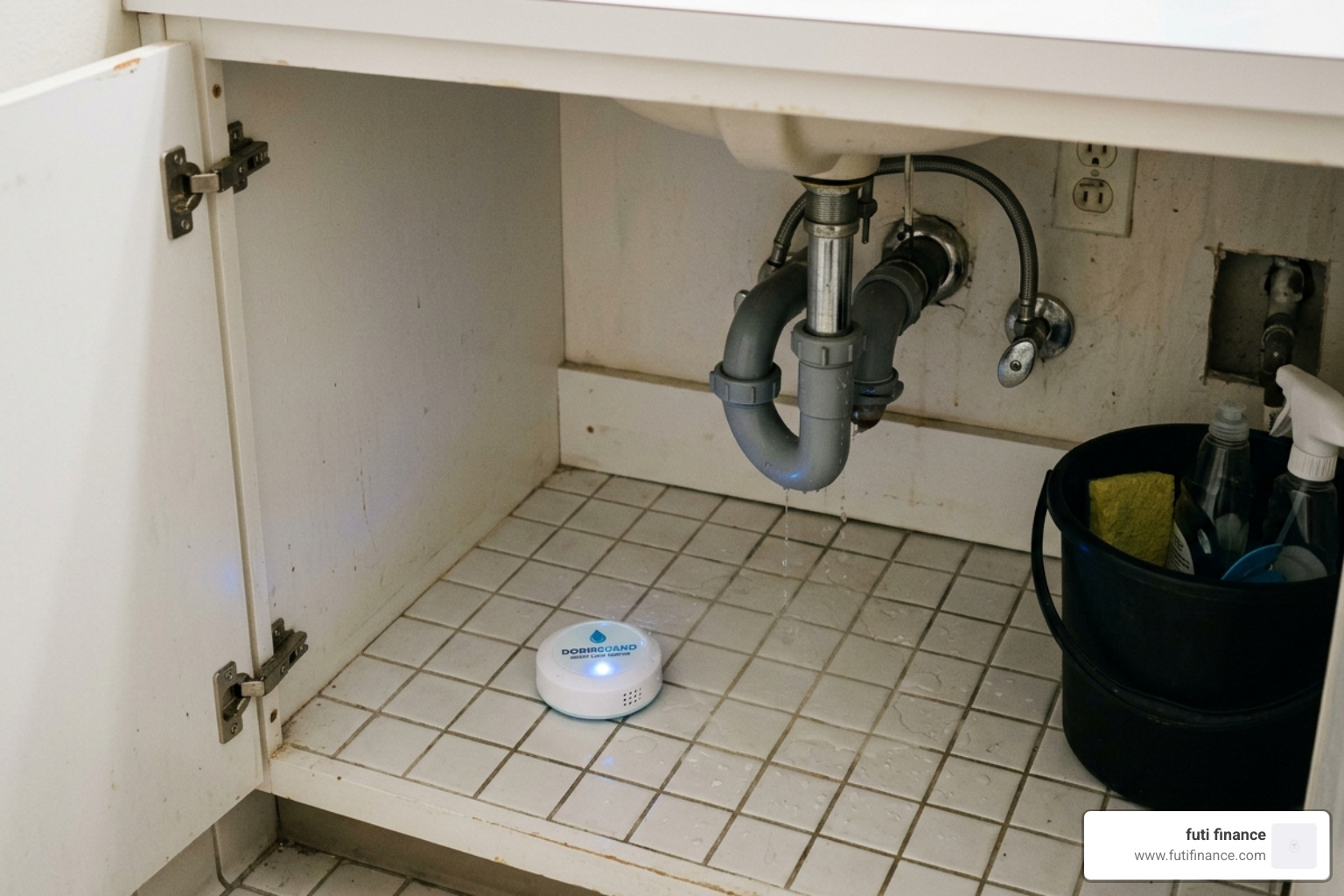
- Water Detection Sensors: Small, battery-powered IoT sensors can be placed under sinks or near radiators. They send a notification to your phone the second they detect moisture.
- Humidity Sensors: These can detect hidden leaks behind walls by monitoring unusual spikes in moisture levels.
- Water Flow Meters: Some modern student housing complexes now use meters that detect abnormal flow rates and can remotely shut off the water.
Actionable Steps for Students
- The Move-In Photo Shoot: Before you unpack a single box, take high-resolution photos and videos of every corner of your room. Look for pre-existing water stains on the ceiling or floor.
- Report “Small” Leaks Immediately: That tiny drip under the sink might seem annoying, but it’s a sign of a failing seal. In a dorm, small leaks become big floods overnight.
- Use Command Strips Wisely: Avoid puncturing walls or pipes. Use removable adhesives for decorations.
- Cleaning Habits: Keep your bathroom floor dry. Standing water can seep into the subfloor, leading to “dorm damage fees” that insurance might not cover if it’s deemed a result of poor maintenance.
- Pre-Move-Out Inspection: Schedule a walkthrough with your RA a week before you leave. This gives you time to address any issues before they turn into deductions from your security deposit.
Frequently Asked Questions about Dorm Insurance
Do universities require students to have insurance?
Yes, many do. For example, the University of South Carolina requires students to have a minimum of $5,000 in personal property coverage (covering fire, water damage, theft, and vandalism) and $50,000 in liability coverage. Other schools, like the University of Alberta, bundle a “master policy” directly into your residence fees so you’re covered automatically. Always check your housing contract to see if you’re already paying for a plan.
Does insurance cover water damage from a roommate’s mistake?
Generally, yes. If your roommate leaves the bathtub running and it floods your side of the room, your student dorm water damage insurance should cover your belongings. However, insurance companies may use a process called “subrogation” to recover the costs from your roommate’s insurance if they were clearly negligent. This is why it’s best for every roommate to have their own individual policy.
What should I do if I find pre-existing water damage?
Document it immediately. If you find a moldy patch or a water stain upon move-in, take a photo with a timestamp and email it to your housing office. This creates a paper trail that proves the damage wasn’t your fault, protecting you from being charged hundreds of dollars in repair fees when you move out.
Conclusion
College is stressful enough without having to worry about a leaky pipe destroying your semester’s worth of notes and your expensive tech. While your university might provide some basic protection, it often isn’t enough to cover the full replacement cost of your life at school.
At Futi Finance, we believe in providing affordable and intelligent insurance solutions tailored for the modern student. Whether you’re living in an on-campus residence or an off-campus apartment, having the right student dorm water damage insurance ensures that a plumbing mishap is just a minor inconvenience, not a financial catastrophe.
Don’t wait for the first big freeze or a neighbor’s laundry accident to think about protection. Protect your investment with student dorm water damage insurance today and get back to what matters—passing your finals.
